
Steam for Linux beta goes public for Ubuntu users
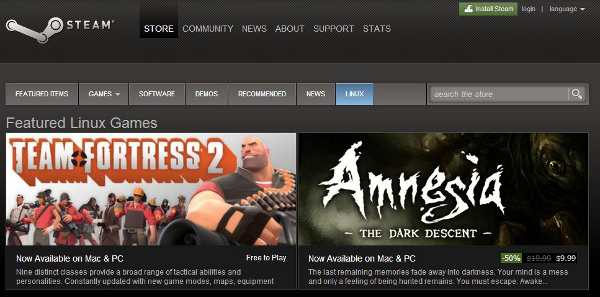
Valve Corporation's popular multiplayer gaming ecosystem Steam has officially hit public beta on Linux, specifically for all users of Ubuntu 12.04.
In November, Valve's Linux team launched Steam for Linux in private beta for about a thousand users, and it included support for approximately 25 games. That number now has grown to almost 40, but with the exception of Team Fortress 2, most titles come from indie developers. Steam's most popular titles like Half-Life 2, BioShock, Portal 2, Elder Scrolls V: Skyrim, all of which are now several years old, are still missing on Linux, and will likely remain so.
Raspberry Pi launches its own app store
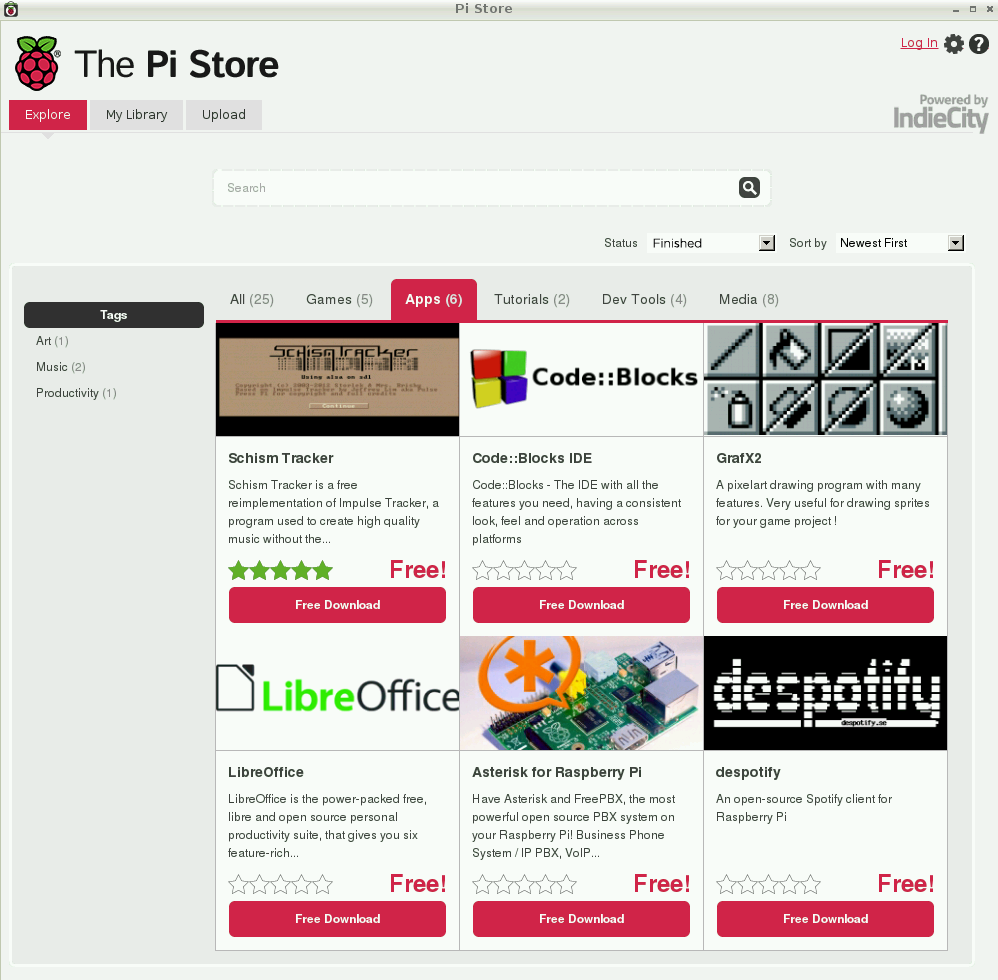
The maker of the popular credit card-sized ARM GNU/Linux computer has launched an online store to enable developers to share their games, applications, and tutorials with other Raspberry Pi users. The device was originally conceived as a way of encouraging youngsters to get into programming, and the store will provide a place for them, and older developers, to share their creations and maybe make a little money at the same time.
At launch the store has 23 free titles, and a paid game (Storm in a Teacup which is priced at £1.99/$3.22). The free content includes utilities such as LibreOffice and Despotify (an open source Spotify client) and classic games including Freeciv and OpenTTD. There’s also an exclusive 3D multiplayer space combat game called Iridium Rising. Winners of the Raspberry Pi Summer Programming Contest are being encouraged to upload their entries to the store, too.

SUSE Cloud adds support for Ceph distributed storage architecture
German Linux pioneer SUSE announced on Tuesday that it has entered into a partnership with Inktank to bring the Ceph Distributed Storage System to the SUSE Cloud private enterprise cloud platform.
Inktank made headlines last September when Canonical co-founder Mark Shuttlesworth put a million dollars behind the development of Ceph, so it could be used as a cheaper storage alternative to Amazon's S3 cloud storage.

RISC OS comes to Raspberry Pi
Raspberry Pi is, in many ways, a throwback to the past and not just in terms of performance. The uncased single-board ARM GNU/Linux computer was originally conceived as a way to get students programming again, like they did back in the 1980s and 90s, and now there’s even a 25 year-old OS available for it.
RISC OS is an operating system you’ll possibly be familiar with if you’re of a certain age, and come from the United Kingdom (like me). A descendant of the OS used in the BBC Micro, it was created by Acorn Computers for the First Reduced Instruction Set Computing (RISC) ARM chips, and made its debut in Acorn's 1987 Archimedes microcomputer.
Steam for Linux goes live as a limited beta
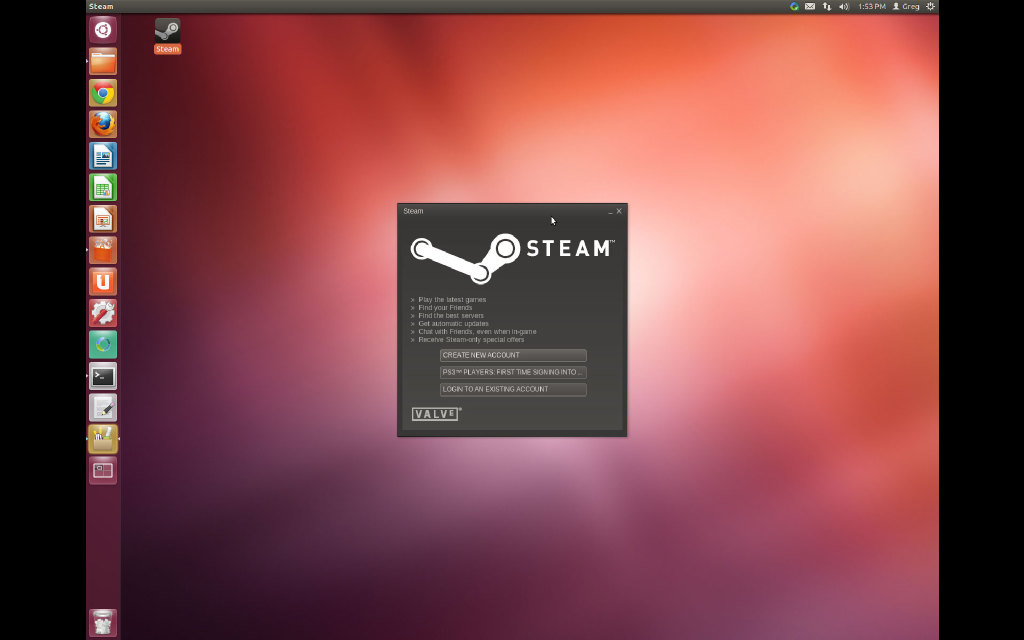
Valve has announced the launch of its Steam for Linux client as a limited access beta. Testers of the invite-only service were chosen from a large pool of applicants (over 60,000 people applied within the first week), with priority given to experienced Linux users.
Initially only available for Ubuntu 12.04+, with more distros to be added in the future, the beta client gives testers access to the free-to-play Team Fortress 2, as well as two dozen additional Steam titles, including Serious Sam 3: BFE, Trine 2, World of Goo, and Darwinia. The beta also includes the Big Picture mode, which allows Steam to be viewed on a TV and interacted with using a game controller.

HP buys "Platinum" status in the Linux Foundation
HP has made numerous outreach attempts to the open source community, even going so far as to donate webOS not long after they purchased Palm for $3.3 billion. Now, the company has donated a whopping $500,000 USD to the Linux Foundation in order to become a Platinum member, joining several other large corporations like Samsung, NEC, Oracle and Intel. The Foundation is a nonprofit organization that dedicates itself to spreading the Linux family.
While Linux never quite became the popular desktop alternative that many hoped it would, it does power the vast majority of the servers that run the Internet. Even desktop operating systems like Ubuntu have become much more user friendly, and many flavors of the OS are capable of running on less powerful machines than those needed to run Windows and OSX. Hewlett Packard has long built servers for Linux-based systems, and even their printers, which can be found in many homes and businesses, run on the platform. The company has been a lesser-tier member of the Foundation for some time.

Steam for Linux starts limited beta testing
It’s fair to say Valve’s boss Gabe Newell isn’t a fan of Windows 8. In fact, the ex-Microsoft man called the new OS a "catastrophe for everyone in the PC space" and, just in case that doesn't make his views clear enough, Valve announced shortly afterwards that it would be working on bringing Steam, its hugely popular games distribution platform, to Linux. A move that prompted me to ask the seemingly unthinkable: Will Windows 8 make Linux the new gaming OS?
I guess we’ll find out the answer to that question soon enough because Windows 8 is now here and, it seems, the Linux version of Steam won’t be too far behind it.
Last Friday, Valve put out an open request for experienced Linux users to apply for the chance to install and test its new Steam for Linux client, stating that it would be notifying successful participants this week, and kicking off the limited beta shortly afterwards.

Tech tribalism leads to BAD computing decisions
Computing, and I use the term in the widest sense, has always been tribal to an extent. People have loyalties, and there’s nothing wrong with that. This year, tribes are called "ecosystems", but whatever the current label, looking around the Interweb it seems to me that tribalism is becoming more prevalent and more aggressive. It’s as if everyone stood on soapboxes with their fingers in their ears, shouting "LALALALALALALA", while at the same time (a good trick, this) yelling through a megaphone that theirs is the only way and anyone who doesn’t agree is just too stupid to be considered human.
Famously, way back in 1994, the writer and thinker Umberto Eco (The Name of the Rose) compared computing loyalties to religions: Apple followers were Catholics who believed that they would find salvation through following the One True Path. Conversely, PC users, like Protestants, were obliged to find their own way through the many paths open to them, and not all would be saved. And (I guess) Linux users are the hairy prophets who come out of the desert proclaiming, "It’s really easy. Honestly. And these days you only have to scourge yourself with thorns once a week …"

Slackware 14.0 available -- get it now!
Slackware is one of the oldest Linux distributions available, and with new versions few and far between, each new release is reason to rejoice. After almost a year and a half since the previous version, Slackware 14.0 is now available for download, or can be purchased on optical media.
Slackware 14.0 also comes with updated KDE 4.8.5 and Xfce 4.10.0 graphical desktop environments, that have been slipped into their respective component packages, saving storage space on archive sites as well as decreasing the time and bandwidth used to download updates. USB, Firewire, ACPI support, Apache 2.4.3, X11R7.7, support for Network Manager, new development tools, a plethora of web browsers including the ability to repackage Google Chrome as a native app, a repository of extra software packages and many more are included. What else is new?
How to install Ubuntu on Oracle VirtualBox
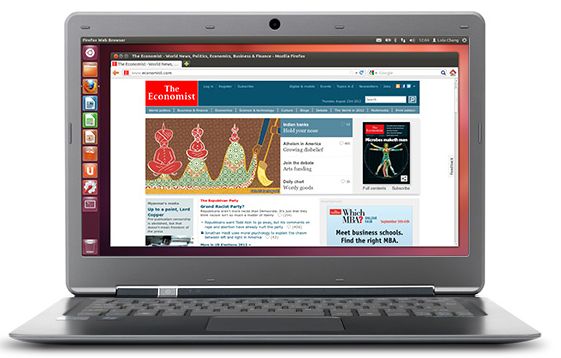
There is no denying that Ubuntu is one of the most popular and easy-to-use Linux distributions available and at the same time a viable alternative to the conventional operating system of choice, Windows. Before you decide to install, you should test it on a virtual machine first, which is where Oracle VirtualBox comes into play.
With Oracle VirtualBox you get all the benefits of installing Ubuntu on a virtual machine but without paying for virtualization software like VMware. It's powerful and easy to set up -- perfectly suited for the job at hand.
Ubuntu provides magic that Windows 8 doesn't
Is it possible to still be an early adopter and only start using Linux full-time now?
Linux is the supreme software conquest for me, and one particular distribution has tormented my early adopter "lifestyle" -- Red Hat Linux. It's now long gone, abandoned by parent company Red Hat, though it was given a new lease on life through Fedora and Red Hat Enterprise Linux.

How to install Ubuntu on VMware Workstation
Gone are the days when setting up and using Linux was a cumbersome experience, and what better way to see than trying Ubuntu -- one of the most popular and easiest-to-use distributions available. Ubuntu has tempted many Windows users to make the switch to open-source, free-to use-software.
One of the easiest methods to test Ubuntu is to install it on VMware Workstation. You get all the benefits of having Ubuntu installed but none of the hassles attributed to the process, because it's all happening in a safe virtual environment.
LinuxLive USB creator now supports Peppermint OS Three, ArchLinux and Slitaz
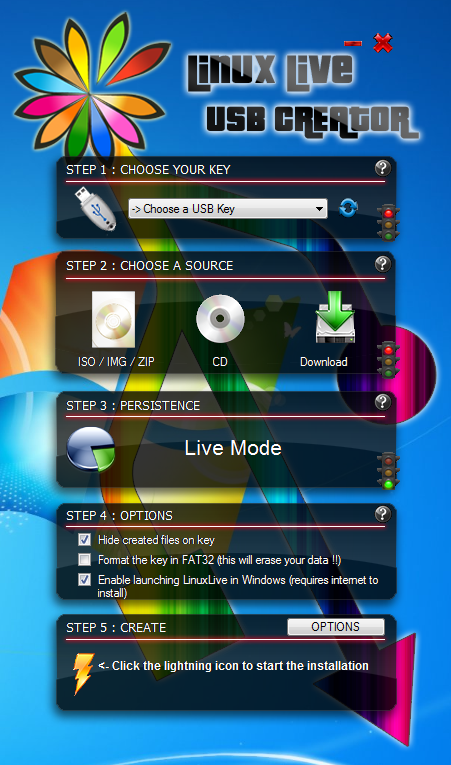
Linux is no longer the geeky OS it used to be. Well, that might not be entirely true, but the operating system certainly has become more accessible in recent years. User friendly distributions such as Ubuntu have increased the popularity of Linux, but making the switch from Windows is still rather a daunting task for most people. If you don’t fancy the idea of wiping out Windows completely, or even going down the dual-boot route, LinuxLive USB Creator lets you make a portable version that can be run from a USB drive.
The very latest version of the program has added support for Peppermint OS Three, ArchLinux and Slitaz, but there are countless other distributions that can be used. Turning your USB drive into a portable Linux drive could hardly be simpler. If you have already download a Linux image, or you already have a distro burned to disc, you can select either of these as a source. However, you are also able to download many different varieties of Linux from within the app.

Will Windows 8 make Linux the new gaming OS?
Windows 8 gets grief from all angles, including from the gaming industry. Valve’s boss Gabe Newell recently called the forthcoming OS "a catastrophe for everyone in the PC space", and Blizzard's Executive vice president of Game Design, Rob Pardo, tweets that Windows 8 "was not awesome for Blizzard either".
There are a couple of reasons why Gabe Newell, who worked at Microsoft for 13 years before leaving to form Valve, doesn’t like the new operating system. The awkwardness of running games through the interface formerly known as Metro is the most obvious issue, but the integrated Windows Store, which will directly compete with Valve’s distribution service Steam, is a much bigger concern for the company.

Linux fans rejoice: Dell XPS 13 will come with Ubuntu
Dell must have read my story on “What will it take to make Linux popular?”, agreed with Linus Torvalds' initial thoughts, then thought that it might be a good idea to publicly announce “Project Sputnik”, which despite the name doesn’t have anything to do with spacecraft like Dell would want you to believe. (Okay, so the skunkworks project predates my story by six months, but surely official timing can't be a coincidence?)
What Project Sputnik does is bring “an official developer laptop based on the Dell XPS 13 with Ubuntu 12.04 LTS preloaded, available in select geographies”, meaning Linux for the people on the Dell XPS 13 in much simpler words. Dell is taking the project to the next level by officially releasing it this fall. Timing is interesting with Windows 8 launching October 26. Since the laptop comes with Linux, presumably it will cost less than its counterpart running Windows.



