


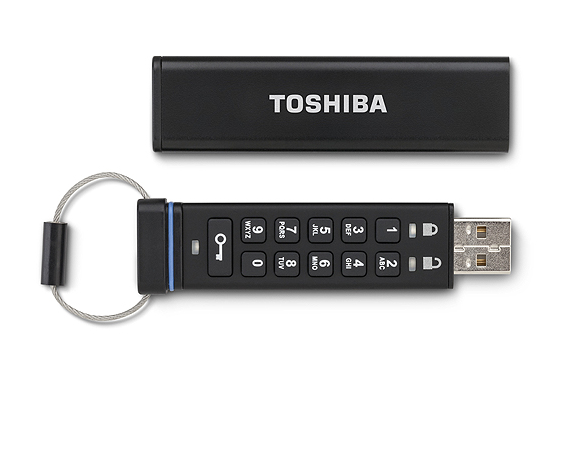
Toshiba releases super-secure Encrypted USB Flash Drive with hardware-based encryption
In a cloud-focused world, more and more people are shunning physical storage. It's hard to blame them, as cloud services are very convenient. Best of all, services like Dropbox and OneDrive store your files off-site, keeping them safe from floods, fires and other disasters.
Unfortunately, not everyone can utilize cloud storage. Businesses in particular may be wary of using the cloud to store or transport sensitive information and trade secrets. Yes, a flash drive may be an option, but what if it gets lost? They are small, and can easily fall out of a bag or pocket. Today, Toshiba releases its solution; the unimaginatively named Encrypted USB Flash Drive. While the name may not be impressive, the AES 256-bit encryption surely is.

'Stop using Windows Server 2003!' says Microsoft
Microsoft is encouraging users to migrate away from Windows Server 2003. Support for the 12 year old operating system comes to an end in the middle of July, and companies are encouraged to seriously consider moving to Windows Server 2012 R2, Microsoft Azure, or Office 365.
Previously published figures suggest that most of those who are yet to upgrade from Windows Server 2003 will do so before the end-of-life deadline. But this still leaves around a fifth of businesses who have to consider what action to take.

Did you watch the Super Bowl online? It was powered by Adobe
The usual droves of people turned out to watch the big game this past Sunday. The Super Bowl is one of the biggest spectacles in sports. While you may or may not have been pleased with the result you should have been pleased with the quality of the online stream -- if that's how you happened to watch it.
Over the past couple of weeks we've brought you news of Adobe security flaws -- they tend to be more regular than anyone would like. In this case, it's nice to report something good from the software maker.

Microsoft's Bing is your source for the 2015 Grammy Awards -- Beyoncé, Sam Smith, and more!
Award shows can be rather lame, depending on many things; the host, the nominees and the overall presentation. The Grammy Awards are my favorite of them all, however, as music is one of my favorite hobbies.
Sadly, while I enjoy the overall spectacle and the show, I often disagree with the results. As a Hip-Hop fan, I was disgusted last year when Kendrick Lamar did not win best rap album. Good Kid, m.A.A.d. City should have won, but I digress. This year, Microsoft is making Bing your one stop shop for all things Grammy, including karaoke and predictions.

Google shows interest in Indian startups, launches Launchpad to mentor 20 of them
In yet another major push into the Indian technology sector, Google has kick-started its Launchpad startup mentorship program in the country. The company has announced plans to offer three-month mentoring to 20 shortlisted startups. The move signals the search giant’s growing interest towards Indian startups.
Launchpad -- which was started two-and-a half years ago -- is run by Google’s developer team. They examined more than 1,450 ventures and shortlisted 20 startups from it. Half of the startups in the curated list are in the B2B space while rest of them cater to businesses. A few of them focus on education and healthcare verticals.
Motorola claims more mindshare than market share
Motorola is getting lots of attention from the media. With smartphones as good as Moto G and Moto X, it's easy to understand why. Because of this, you might think that Motorola is selling lots of devices. After all, if it's so popular then that's a given, right? Well, that's not the case, at least not yet.
In reality, Motorola claims more mindshare than market share. According to parent company Lenovo, the long-lasting smartphone vendor only shipped a tad over 10 million units in the last quarter of 2014. That puts it on the same level as Microsoft, which, Strategy Analytics says, is only at three percent market share. Motorola is far, far away from leading players in this regard.

Clustrix launches updated eCommerce database
Availability and performance are key factors to success in the eCommerce field but as sites grow, the software used to support them needs to be able to keep pace.
San Francisco-based database company Clustrix is rolling out the latest version of its ClustrixDB product to help businesses cope with expansion and reduce the risk of slowdowns and outages.

How busy were you last Tuesday? Desktop APM can help
Spend a day on some personal PC task and you’ll probably only be interested in the end results. Did you find the information, produce the document, achieve everything you wanted?
Go to work on a commercial project, where someone else is paying, and you’ll probably want a far more detailed breakdown. Which applications did you use, for how long, and just how much work was involved?

UK companies pay more attention to cyber security
We reported a few weeks ago on research showing that cloud security was becoming a concern outside the IT department and having an impact on the boardroom.
Now a new study in the UK by Tom Neaves, Managing Consultant at security specialist Trustwave backs this up, showing that cyber security is increasingly becoming a corporate issue.
I added a PowerColor AMD Radeon R7 250 2GB GDDR5 to my AMD AM1 desktop
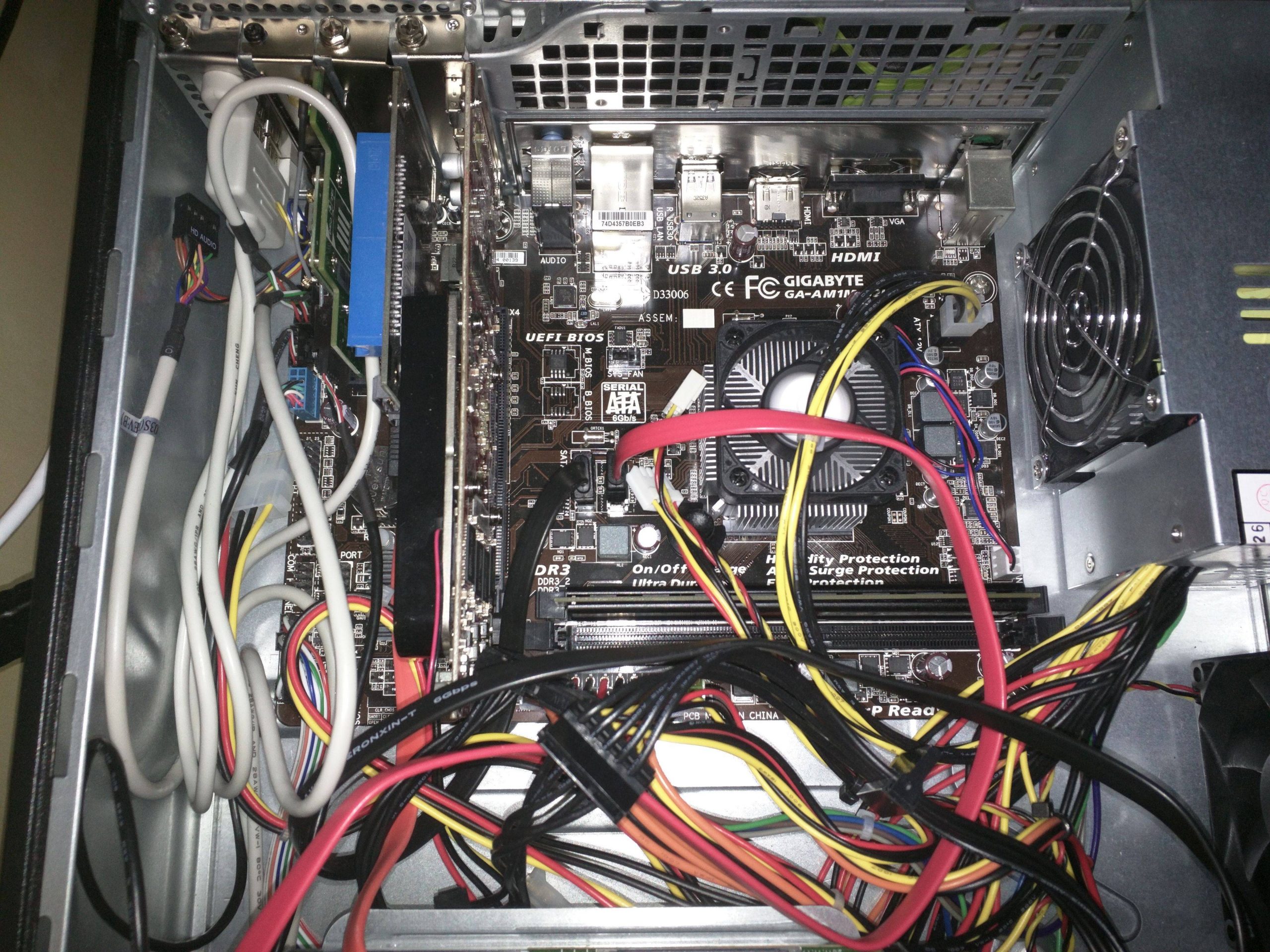
Last year, I declared that AMD's AM1 platform was one of my favorite things of 2014. It's not hard to see why; it is inexpensive, uses very little electricity and offers ample performance for the average home user. For example, my desktop uses a GIGABYTE GA-AM1M-S2H motherboard that retails for $35, while the Athlon 5350 Kabini Quad-Core 2.05GHz APU is $65. In other words, for about $100 you can start building a really nice computer.
While the Athlon 5350 supports 4K, the motherboard only has HDMI, which can be problematic with some monitors (even with adapters). Plus, a portion of the system RAM is used for the integrated video. This is particularly tough on an AM1 PC, as it only supports single channel memory. In my testing, the best performance is with a single stick, which maxes at 8GB. With that said, I wanted to try adding a discrete card to my desktop, so Windows can utilize the full 8GB. My requirements? I wanted an AMD card, it had to do 4K, had to have DisplayPort and had to be low-profile to fit my Micro ATX case. Enter the PowerColor AMD Radeon R7 250 2GB GDDR5.
Relying on Windows 10 security is risky for business
Microsoft’s latest operating system, Windows 10, unveiled earlier this month, places a fresh emphasis on corporate security. But there are already industry rumblings that over-reliance on Microsoft’s new security features could be dangerous.
Windows 10 is designed to run across the types of devices common to most business users: PCs, laptops, tablets and smart phones. In order to safeguard users’ privileged data, the new OS uses a two-factor authentication system utilizing biometric ID in the form of a finger or thumb print. Users can enroll a single device, such as a smart phone, which will effectively become their mobile credential. It will enable them to sign-in into all of their PC’s, networks, and web services as long as their smart phone is nearby.

Check and manage Win7+ and Mac security with OPSWAT GEARS
How secure is your computer? Finding out can take a little work. You might have to check your antivirus, firewall, backup program, maybe the Windows Action Center and various other system settings.
OPSWAT GEARS is a free utility which tries to do everything you need from a single interface. It works on individual PCs (Windows 7+) or Macs, and can also be used to check and manage security on up to 25 network computers (switching to the paid version removes that restriction).
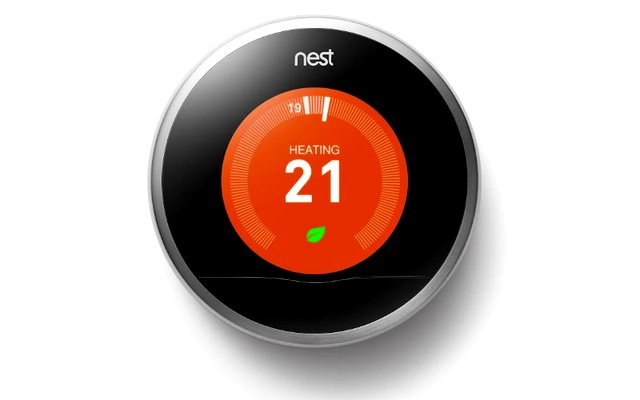
Nest talks numbers on money and energy the thermostat can save
The programmable thermostat concept isn't new, but today's versions are becoming increasingly smarter. Now it's not just programmed, but actually learns from your habits and it can even integrate with other things in your home -- the Internet of Things. There is, perhaps, no better example than Nest, which has become quite popular with the tech crowd.
But what is the real advantage in all of this? Saving energy, and therefore money. Now Nest is reveling the numbers it has been collecting. In an effort to continuously improve its offering, the company keeps tabs on what is going on.

What's the point of AdBlock Plus if Google, Microsoft and Amazon can pay to bypass it?
Ads are pretty much universally hated; in the list of lovable things in the world, ads rank pretty far down. On TV, in movie theaters, in magazines and online, ads are forced upon us and are impossible to avoid. Except that's not true online. Ad-blocking software can be used to filter out the stuff you don’t want to see, making for a happier web browsing experience.
However, it turns out that installing an ad-blocking tool like, ooh... I dunno... AdBlock Plus... is not enough to prevent the appearance of unwanted advertisements. Some time ago we learned about the whitelist operated by AdBlock Plus and now the Financial Times reports that big companies like Google, Microsoft and Amazon have paid to be included on the list so their ads are no longer blocked.

Surprise! Adobe Flash has a security flaw on Windows, Mac and Linux
Well, it's been a week since we've heard about a security vulnerability in Adobe Flash -- that's like a lifetime in terms of this program. While the application is slowly receding, it's far from dead and that means users have reason for worry. Of course, using Flash at all is a general concern -- it's a highly targeted platform for attackers.
Now Adobe is issuing it's latest warning, this one for "drive-by attacks". The flaw is technically known as CVE-2015-0313, though that moniker does little good for the end-user. What people really need to know is that the problem has been found to be used on the web.



