

Permission-free post-loading lets carriers push crap apps to Android handsets
It used to be that you'd buy a new PC or laptop and have to spend the first hour or so removing all of the crap that the manufacturer had installed. The same idea carried across to mobile phones, particularly in the case of Android handsets, but the key difference is that -- at least without rooting -- many carrier apps can be all but impossible to remove. Now, thanks to "post-loading" the problem is about to get worse.
As the term suggests, post-loading makes it possible for a carrier to push apps to handsets and install them secretly. This is all thanks to Digital Turbine's Ignite system, and the likes of Vodafone, Verizon, T-Mobile and more are listed as clients. Of course, it's all about money or, as Digital Turbine puts it, "maximizing the efficiency of pre and post loading applications on smartphones for more advertising revenue".
Social networks told to be honest and stop bamboozling their users
The UK parliament is calling on social networks such as Facebook and Twitter to simplify their terms and conditions. The Science and Technology Committee has expressed concern that privacy policies and other documents are strewn with legal terms that most people do not read or understand. This means that most social network users are simply not aware that they have agreed for their personal information to be used in various ways -- and are certainly unaware of how it might be used.
The Committee is calling for social networks to make a commitment to explain in very clear terms how personal data is shared and used. It wants to work with the government to draw up a set of standards -- almost a social networking manifesto -- that companies can sign up to.

Now Twitter is going to start monitoring which mobile apps you download
Hate 'em, loathe 'em or abhor 'em, it's hard to avoid ads. You know that you're a consumer. Companies exist because you consume, and you are encouraged to consume more and more. To help lead you to consume, you need to be subjected to advertising -- it's all part of the money-go-round of using the web.
Tailored ads are more likely to bring in cash, and social networks are in the business of gathering information about their users with a view to delivering the most laser-focused targeted advertising possible. The latest venture by Twitter involves keeping tabs on the apps you install on your iOS or Android phone or tablet.
Twitter now lets you share public tweets via Direct Message
You're probably well aware that Twitter features a search option at the top of the page which you can use to track down individuals or topics. Less well-known is the dedicated search page which is the Twitter version of Google (complete with advanced search parameters), albeit one that is -- obviously -- limited to searching within the confines of Twitter itself.
A couple of days ago, this search engine became slightly more useful when Twitter announced that it was indexing every single tweet that has been sent since 2006. Creating a somewhat Shakespearean internet-within-the-internet, Twitter is a valuable resource not only for information but also social commentary. Another update today makes it possible to share any interesting tweets you discover via direct message in addition to the recently added URL sharing option.

Free tool detects 'government surveillance spyware'
Free software that can detect the presence of surveillance spyware has been launched by a global coalition of human rights and tech organizations.
Organizations including Amnesty International, Privacy International, Digitale Gesellschaft and Electronic Frontier Foundation have teamed up to unveil the open source tool Detekt.
Mozilla, EFF and others join forces to encrypt the web with free security certificates
It has been a long time coming, but the web is slowly transitioning away from HTTP to HTTPS. Google has done it with Gmail, and Yahoo did the same with its webmail service, and security advocates would like other websites to follow suit. The problem, for smaller sites at least, is the cost involved. But a new venture between Electronic Frontier Foundation (EFF), Mozilla, Cisco, the University of Michigan and IdenTrust will eliminate the cost obstacle when it launches next summer.
The partnership has brought about the creation of Let's Encrypt, a new certificate authority that will provide free security certificates to those who need them. It is hoped that handing out cost-free certificates will encourage more sites to adopt the HTTPS protocol. But Let's Encrypt does not just eliminate the financial hurdle.

New report claims 81 percent of Tor users can be identified
A new report claims that more than 81 percent of Tor users are identifiable using a method that threatens Internet anonymity.
The study, titled "On the Effectiveness of Traffic Analysis Against Anonymity Networks Using Flow Records", claims that a technique known as traffic confirmation can be used to identify users.
Facebook proposes privacy policy changes in simplified, prettified paperwork
Facebook gets something of a bad rap when it comes to its privacy policy. Delve into the social network's terms and you're almost certain to find something you disagree with. This is the same with many companies, particularly those with an online presence, but users seem to be continually surprised to discover how their data and activities are being used and tracked. Part of the problem is that -- just like with software EULAs -- very few users bother to read through policies in full.
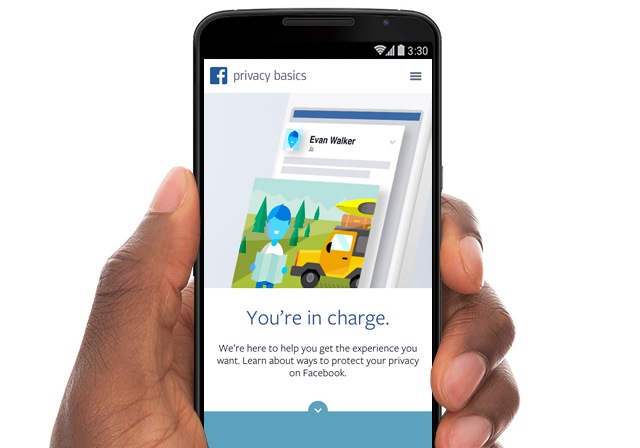
Mark Zuckerberg's social network is looking to change that. Facebook is introducing Privacy Basics which provides easy-to-follow guides to controlling how your online content is shared with others. But there are also a number of changes proposed to its privacy policy. Facebook is looking for feedback, and assures users that "you’re in charge." But you'll need to be quick -- there's only a week to give your opinion.

Gain your customers' trust with ethical data use
Nick Bromley, a privacy consultant for the Greater London Authority, spoke at the NextGen 2014 conference about the importance of being an ethical company when it comes to gathering data on your customers, and how to retain their trust when it comes to data.
Here is what he had to say on the subject.
Google wants US Privacy Act extended to Europe
Privacy is in the news more than ever before, and high-profile companies are falling over themselves to show just how much they care about protecting the rights of their users. We've witnessed all of the transparency reports about government data requests after the Snowden revelations. We've seen Facebook trying to create a safer email standard. We've seen privacy violations by government websites, and we've seen how those in positions of power believe that privacy is not an absolute right.
Google -- ever the master of PR -- thinks that it's time more was done to protect the privacy of internet users; specifically those in Europe. Google feels that the US Privacy Act should be extended to cover citizens of the EU. But what does this actually mean?

Security breach reveals personal details of USPS employees and customers
The latest high-profile security breach has exposed the personal details of hundreds of thousand of USPS workers, as well as customers. The attack, which is suspected to originate from China, took place in the middle of September, but details are only just emerging. An investigation by the FBI started straight away and is still on-going.
USPS says that employee information such as "names, dates of birth, Social Security numbers, addresses, beginning and end dates of employment, emergency contact information" was compromised. The security breach also affects customers as call center data was obtained by the attackers, including "names, addresses, telephone numbers, email addresses".

Facebook is taking over from Google as gatekeeper of the internet
Google is widely regarded as being one of the controllers of the internet. It is by far the most popular search engine and if a site does not appear in the first few pages of results, it may as well not exist. But Google is far from being the only gatekeeper to the internet; Facebook is increasingly vying for that crown, whilst making efforts to make access more secure through Tor. But what does this mean?
Facebook accounts for a terrifying percentage of web traffic -- it is the second most visited website in the world according to Alexa. This means that it has a huge influence online, giving the social network the opportunity to shape the web and holds great sway in determining which sites, services, and stories rise to popularity. To many people, this influence is all but invisible, and this is perhaps the most concerning part of the story. So how does Facebook's influence present itself?
Federal government websites violated the privacy of people looking for AIDS information
Government websites set to help people gain access to information about AIDS have been leaking the data about its users. Anyone visiting AIDS.gov and making use of the search box will probably be concerned to learn that, until the end of last month, data was transmitted in unencrypted form. The Washington Post points out that this data could be very easily intercepted and used to identify an individual.
We know that web users are more concerned about privacy than ever before -- and little wonder when authorities say that privacy is not a right. We know that there are various ways in which web activity can be monitored, but it seems that the smartphone app associated with AIDS.gov included this feature as standard -- the app collected and transmitted the latitude and longitude of users, again unencrypted.

Privacy battle on the horizon
The new internet protocol known as Multipath Transmission Control Protocol enables easy privacy invasion, but also secures today’s networks.
On the internet, your traffic is not your own -- no matter how you roam. New multipath technologies, including one found hidden dormant in the internals of the newest Mac operating system, OS X 10.10 Yosemite, may provide consumers with more tools to gain control of their online communications. However, this freedom comes at a price, which network operators may not be willing to pay.
Law enforcement agencies swoop on dark net, closing Silk Road 2.0 and other sites
As concerns about online surveillance mount, more and more people are seeking ways to protect their identities and disguise their online activities. Services such as Tor are increasingly popular as surfers look for ways to maintain their privacy. Facebook even recently got in on the act, providing users concerned about their privacy with a secure .onion address through which to access the site.
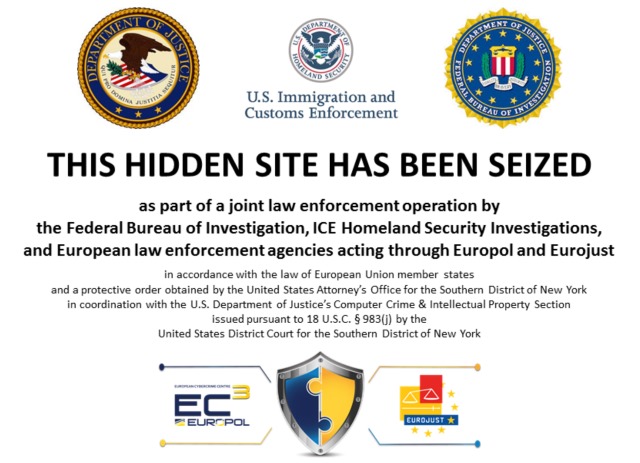
While the likes of Tor are often turned to as a means of bolstering security and privacy, there is also a darker side -- the dark net, the dark web -- which is used for more nefarious activities. One site that rose to notoriety was Silk Road, an anonymous online marketplace where just about anything could be bought. Last year, the FBI closed the service, but Silk Road 2.0 soon sprang up out of the ashes. This has now also come to an end as the FBI once again shut down the marketplace with the help of Europol and Eurojust in a coordinated clampdown on the darker side of the web.



