Apple internally acknowledges Personal Hotspot problems in iOS 13 and iPadOS 13


If you've been having trouble using your iPhone or iPad as a hotspot for other devices, you are not alone. Many people have experienced problems using the Personal Hotspot feature, either failing to connect at all, or suffering frequent disconnections.
Although Apple is yet to publicly acknowledge that there are issues, leaked internal documents show that the company is aware of the problem and has warned Authorized Service Providers that there may be an influx of queries from customers.
Logitech Combo Touch Case for iPad has detachable keyboard and integrated trackpad


Earlier today, Apple shocked the world with its newest iPad Pro. While that tablet is very nice, it was an accessory for it that caused true excitement. You see, the all new Magic Keyboard has an integrated trackpad, meaning the iPad can do double duty as a tablet and a laptop. It's like a Microsoft Surface, only much better. Unfortunately, both the new iPad Pro and Magic Keyboard are quite expensive, making the combo nothing more than a dream for many consumers.
Thankfully, this trackpad support is not limited to any specific iPad, meaning it can work with a non-Pro model too. In fact, any iPad that gets the upgrade to iPadOS 13.4 will also get the compatibility. If you are someone like me that owns a meager 7th generation iPad (which will get iPadOS 13.4), I have some really great news -- Logitech has announced a keyboard case with trackpad that works with the lower-end Apple tablet. Called "Combo Touch Case," it isn't just compatible with the the 7th-gen iPad -- there is also a model for the older iPad Pro 10.5 and the 3rd-gen iPad Air. The keyboard is detachable too, offering a more comfortable experience when using the iPad as a tablet. There is even a holder for the first-generation iPad Pencil. Best of all, it will protect against drops and bumps.
Apple unveils iPad Pro with trackpad support, signaling eventual death of Mac
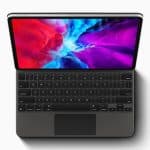
Today, Apple announced the death of the Mac. Well, sort of. Actually, the company released an all-new iPad Pro and Magic Keyboard with a trackpad. In other words, the iPad is finally an official laptop. No longer must you touch the screen when using a keyboard -- you now have an official trackpad that can manipulate the interface with an on-screen pointer. Yes, iPad has finally reached its apex, becoming the thing consumers have been clamoring for. Let's be honest, most home consumers would be better served by an iPad Pro and this new keyboard than they would with a Mac.
Keyboard and trackpad aside, this looks to be the best iPad ever. Apple promises that the A12Z Bionic chip is so powerful, that the new iPad pro is actually faster than most Windows laptops! The Liquid Retina display can achieve an insane 120 Hz refresh -- adjustable to conserve battery. It even gains an ultra-wide camera and five studio-grade microphones, making the iPad pro an even better tool for photographers and other creators. Most exciting, however, is the new LiDAR Scanner.
Apple says you can use disinfectant wipes to clean the Coronavirus (COVID-19) off your gross iPhone, iPad, or Mac

Want to know a secret? I have never cleaned my iPhone or iPad. Gross, right? Even more nauseating, I often use them both while sitting on the toilet! Hey, don't blame me for this behavior -- Apple caused it. For the longest time (years), the company never suggested using disinfectant wipes on its products. At the Apple store, I had countless "geniuses" tell me that alcohol would ruin the displays. And so, I just lived with the germs.
With the Coronavirus (COVID-19) dominating the news, however, people are starting to take stock in their hygiene practices. Suddenly, as we all wash our hands more frequently and douse ourselves in Purell, germ-ridden devices become a much more important topic. Thankfully, starting today, Apple has finally given us the green light to use disinfectant wipes to clean the Coronavirus (COVID-19) off the iPhone, iPad, and Mac computers.
Apple now allows ads in push notifications on iPhone and iPad

Push notifications could be about to become rather more irritating for iPhone and iPad users. Apple has updated its App Store Review Guidelines, giving developers permission to use push notifications for advertising purposes.
There is something of a silver lining to this dark cloud, however. App-makers are not being given carte blanche to bombard people with an endless stream of ads; Apple says ads are only permitted when "customers have explicitly opted in to receive them". Nonetheless, it marks a major policy change for Apple.
Logitech releases Slim Folio keyboard case for 3rd generation Apple iPad Air
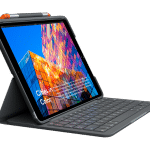
Apple's iPads are all wonderful devices. Whether you buy an iPad, iPad mini, iPad Air, or iPad Pro, you are guaranteed a top-notch tablet experience. Believe it or not, they can even serve as decent makeshift laptops too -- when you add a keyboard case. This is particularly true nowadays as Apple has forked iOS into iPadOS for its tablets. The operating system is now better focused for both the tablet and laptop experiences. iPadOS 13 even added rudimentary mouse support, but it really isn't a fully matured option -- yet.
If you need a keyboard case for your iPad, you can always go with Apple's own option, but in-the-know consumers will likely turn to another company -- Logitech. Yes, that company's keyboard case offerings, including the Slim Folio, have historically been very well received. Today, Logitech launches that popular product for the 3rd generation of iPad Air.
Apple warns users to upgrade their old iPhones and iPads or face GPS and time issues
Apple has issued a warning to owners of some iPhones and iPads, advising them to update their operating system within the next two weeks. The company warns that devices that do not upgrade iOS will experience problems with GPS and incorrect date and times -- which in turn could cause problems with iCloud, email and other services.
The cut-off date is 12:00 a.m. UTC on November 3, 2019 and Apple is eager for users to upgrade as soon as possible as when the date rolls around it may not be possible for affected devices to receive OTA updates.
Pandora goes dark on Apple iPhone and iPad

I've never been much of a fan of dark mode -- especially on a desktop operating system. White text on a black background tends to annoy me. With Windows 10, for instance, I didn't really enjoy using the operating system until the light theme was introduced in the May 2019 update. Believe it or not, I use Apple Music instead of Spotify because I hate the latter's always-on dark interface. And yet, on iOS 13, I actually like Apple's implementation of dark mode -- in the evening, I have my iPhone and iPad switch to it.
Now that I am using dark mode on my Apple mobile devices, I am trying to use apps that auto-switch to dark when the operating system does. It is very satisfying to have a consistent interface where apps respect the user's dark desires. Today, the very popular music app, Pandora, finally introduces dark mode support for iOS 13 and iPadOS 13. In addition, the Pandora mobile app is getting enhanced Siri compatibility.
Apple shows off iPadOS 13.1 in new video

With iPadOS 13.1 available to iPad owners around the world, there's a lot to discover in the latest update.
To help tablet owners learn about the new features and options, Apple has shared a new video showcasing what's on offer. From swipe typing to full page screenshotting, Apple is continuing to push the iPad as a serious alternative to a laptop.
Apple iOS 13 and iPadOS bugs grant third-party keyboards 'full access'
If you're using a third-party keyboard on your iPhone or iPad, Apple has a warning for you. A bug in the recently released mobile operating system means that such keyboards could be granted "full access" permissions.
The bug means that third-party keyboards could capture any and all keystrokes entered by a user, including sensitive data such as usernames and passwords.
Apple iPad 7th-gen gets bigger display and is faster than the best-selling Windows 10 PC

Apple's iPad changed the world in 2010, but since then, tablets have fallen a bit out of favor with consumers. Google abandoned the tablet hardware business entirely, relying on manufacturers such as Samsung and Huawei to make slabs running Android. While iPad remains the best tablet experience, and Apple seems committed to the iPadOS operating system, even that device is not the juggernaut it once was. Many consumers seem totally satisfied using their smartphone.
Still, iPad has plenty of fans, including those that try to use the Pro model as a makeshift laptop with a keyboard attachment. Other people, such as yours truly, only utilize iPad for media consumption. The lower-cost standard 9.7-inch iPad more than meets those media-focused needs. Today, Apple unveils the 7th-generation of the "regular" iPad, and it is better than ever.
iPadOS is Apple's new operating system for iPad

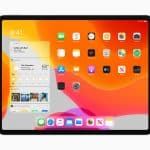
At its WWDC in San Jose, California, Apple today took the wraps off iOS 13, the future iteration of its mobile operating system for iPhone. It also revealed that going forward, the iPad will run a special variation, called iPadOS.
This is much the same as iOS -- it gains all the new features found in iOS 13 -- but in addition it comes with a new Home Screen, better multitasking, and more ways to use Apple Pencil.
Urban Armor Gear (UAG) 'Scout Series' is a rugged case for Apple iPad Pro and Smart Keyboard Folio

Apple's iPad Pro is the best tablet on the market, and believe it or not, it can be a fairly useful "laptop" when paired with the Smart Keyboard Folio. Microsoft is simply wrong in its claims about Apple's tablet. You can even expand iPad Pro functionality with USB-C dongles. Without mouse or trackpad support, however, iOS will never be a proper desktop operating system, but I am hopeful that will be added eventually.
If you are someone who owns both the Apple iPad Pro and Smart Keyboard Folio, Urban Armor Gear has a really cool new rugged case you should check out. Called "Scout Series," it protects the tablet without the need to remove the keyboard. In fact, this case requires the keyboard be attached. It even has a useful Apple Pencil holder that allows charging.
Shocking! Apple launches voluntary recall and exchange program for some power adapters

Apple has announced a voluntary recall of some of its AC wall plug adapters and Apple World Travel Adapter Kits over fears that they could cause electric shocks.
While the number of known incidents is low -- Apple says there have been just six worldwide -- there is a risk of the wall plug adapters breaking and causing a shock if touched. The recall relates solely to three-prong wall plug adapters, not USB power adapters. Anyone who has one of the adapters can obtain a replacement free of charge.
iOS 13 could herald the arrival of system-wide dark mode, better multitasking and so much more

With the big reveal of iOS 13 thought to be mere weeks away, leaks and rumors now abound. So, what can iPhone and iPad owners expect this time around? Well, it's looking as though 13 could be a lucky number as much sought after features are on the cards.
According to sources, the long-awaited dark mode is said to be arriving, along with new gestures. Apple is also said to be bringing improved multitasking and a lot more besides.
Recent Headlines
Most Commented Stories
© 1998-2025 BetaNews, Inc. All Rights Reserved. About Us - Privacy Policy - Cookie Policy - Sitemap.