
Google turns 21: How two Stanford University whiz kids accidentally built a tech empire
Google is everywhere. It's behind the world's most popular mobile operating system and map, one of the most successful email services ever, and has even expanded into the finance, wearables and transport sectors. What's more, it probably still serves as your browser home page (or just a means of finding out whether you're connected to the Internet or not).
The still-relatively-young company, which turns 21 today, has come a hell of a long way since its inception in the late 90s, and looks well capable of dominating each and every avenue it decides to enter. However, the company had very humble, and indeed slightly odd, beginnings.
Google Chrome update to blame for unbootable Macs
Earlier in the week, Variety reported about a mysterious problem with Macs in Hollywood. As the issues -- which prevented systems from rebooting -- affected television and film editors in LA, it was initially thought that the Avid Media Composer software was at fault.
But in fact, it was Google that was to blame. A buggy update for the company's Chrome browser caused issues for a number of Mac users whose systems met certain conditions. Google has published details of a workaround for those hit by the problem which saw the Chrome update damaging the macOS file system.
Court rules Google need only apply the 'right to be forgotten' in Europe, not worldwide
Google has won a case in the European Court of Justice meaning the company does not need to apply the controversial "right to be forgotten" on a global basis.
In a case between Google and Commission Nationale de l'Informatique et des Libertés (CNIL ) -- a French privacy regulator -- the court ruled that Google need only remove links from search results within Europe.

Google Play Pass is the Netflix of Android apps and games
Apple recently launched its Arcade service -- a monthly games subscription for iOS. For just $4.99 a month, you get access to a bunch of titles without advertisements or in-app purchases. The first month is free, so I have been testing it on my iPhone 8 Plus. You know what? It is just OK -- not great. Many of the games are garbage that I wouldn't have bought in the first place. In other words, while $5 a month seems like a good deal, you have to actually find value in the games for it to be worthwhile.
Today, Google launches its version of Apple Arcade, and it seems like a much better deal. While it carries the same $4.99 monthly cost, and it too includes games, it also provides access to something Arcade doesn't -- applications. Quite frankly, as an adult, a buffet of productivity apps is more interesting to me than a collection of mobile games. Having both, however, is really cool, though -- I hope Apple follows Google's lead.
Google to automatically delete more audio recorded by Assistant and introduce new privacy protections
Digital assistants have been in the spotlight recently after various stories about contractors listening to recordings. Following a backlash from users and privacy advocates, Google has announced a number of changes to how it stores and processes audio data.
The company also takes the time to explain a little bit more about how it processes audio recordings and to reveal the new privacy protections it will use in the recording transcription process.
YouTube changes its verification process after a huge backlash against planned update
Almost immediately after having announced planned changes to the way channel verification works, YouTube has bowed to pressure from unhappy users and says it will rethink its approach.
Late last week, YouTube announced verification changes that meant many channels would lose their coveted check mark. Following a backlash, the company now says that no one will lose their verified status, so there is no need to appeal against it.

YouTube account verification changes draw ire from creators
On all branches of social media, account verification is what users yearn for. A little checkmark next to a username can lead to a massive increase in followers, and for creators this can in turn lead to a significant increase in earnings.
This is why there is a so much anger at YouTube's decision to introduce sweeping new changes that will see may users who have earned verification losing their verified status. As well as annoyance, there is a widespread feeling of confusion about what is happening, and why.
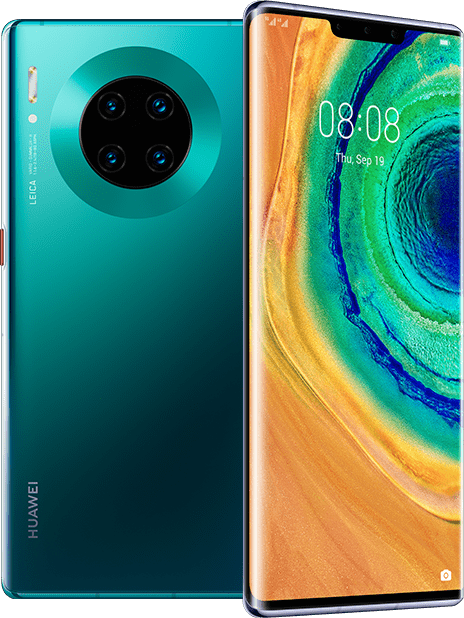
Huawei unveils Mate 30 Series of Android 10 smartphones -- no Google needed
Earlier today, Huawei unveiled five new phones as a part of the Mate 30 series -- the Mate 30, Mate 30 5G, Mate 30 Pro, Mate 30 Pro 5G, and the Porsche Design Mate 30 RS. They are absolutely gorgeous smartphones with high-end specifications. They are even running the latest and greatest Android 10 operating system. Quite frankly, the beautiful design shows how Apple should have laid out its rear cameras on the iPhone Pro. In fact, while the Mate 30 has a triple camera system like the iPhone 11 Pro, the Mate 30 Pro has four cameras! I guess we can really see which phone deserves its "Pro" moniker!
All models of Mate 30 have a notched display, with the notch being a bit bigger on the Pro and RS models. The Pro and RS models have a 6.53-inch screen (OLED FHD+ 2400 x 1176), while the regular Mate 30 is a bit bigger at 6.62-inch (OLED FHD+ 2340 x 1080). All are powered by the same octa-core processor (2 x Cortex-A76 Based 2.86 GHz + 2 x Cortex-A76 Based 2.36 GHz + 4 x Cortex-A55 1.95 GHz), 16-Core Mali-G76 GPU, and 8GB of RAM -- with the exception of the RS, which has 12GB of RAM. The Mate 30 comes with 128GB of storage, while the Mate 30 Pro has 256GB. The high-end RS gets an insane 512GB. And yes, they all feature an in-screen fingerprint reader!

Google Fi finally gets an unlimited plan
Want to know a secret? Most people probably don't need an unlimited data plan on their smartphone. And yet, many folks will happily overpay for the peace of mind -- worrying about data overages can be stressful. You know what? That's not so crazy. Look, I am all for saving money, but at the same time, I don't want to concern myself with anything other than consuming media and surfing the web when on my phone. So, yes, I crave unlimited even though I don't need it, and I am not alone.
Today, Google Fi launches an unlimited plan for the first time ever. This is significant, as Google's service (which utilizes T-Mobile, Sprint, and U.S. Cellular networks for enhanced coverage) was historically marketed as a way to save money by only paying for the data you use. With that said, this new unlimited plan is surprisingly very affordable -- I find myself quite intrigued. As an extra bonus, until September 18, Google will give 50 percent off a Pixel 3 or Pixel 3XL. Yes, I know, the Pixel 4's release is imminent, but if you don't need the latest and greatest, this could be a great way to save some money.
Chrome 77 makes it easy to send tabs from one device to another
With the release of Chrome 77 -- which is rolling out right now to desktop and mobile platforms -- Google just made it a whole lot easier to send tabs between devices.
If you're reading a website on your laptop and want to finish off a story on your journey to work, there's no need to email a link to yourself anymore. Now you can easily bounce an open tab from your computer to your phone, from your phone to your computer, or between two computers -- all it takes is a few clicks.

What the 'Summer of Outages' showed us, and what we can do about it
Summer 2019 was a rough one for the internet, with systemic outages occurring frequently and in quick succession.
Some of these outages were caused by internal errors, others external, but two overriding causes emerged: greater network complexity and the frequency and pace of code change. In aggregate, these outages serve as a painful reminder of just how fragile the internet is, especially as networks and services grow increasingly interconnected and co-reliant.
Apple criticized for insensitively downplaying Google's iOS vulnerability revelations
Apple has tried to downplay concerns raised by Google about security vulnerabilities in iOS that could be exploited by malicious websites. Google's Project Zero recently revealed details of flaws in iOS that were being used to target and monitor iPhone users.
Other security researchers went on to warn that the vulnerabilities were being used to target Uyghur Muslims, possibly in a campaign run by the Chinese government. Having remained silent for more than a week after the revelations, Apple finally issued a statement responding to the findings, prompting criticism that the company was trying to downplay the issues.
Google open sources its differential privacy framework
Google has today announced the launch of an open-source version of the differential privacy framework that powers many of the company’s data analysis systems.
Differentially-private data analysis is an approach that enables organizations to learn from the majority of their data while simultaneously ensuring that those results don't allow any individual's data to be distinguished or re-identified.
Brave browser accuses Google of using hidden web pages to track users
Google stands accused of using hidden web pages to circumvent EU privacy regulations, secretly sending users' personal data to advertisers.
The accusation comes from the privacy-focused Brave web browser which says it has, "uncovered what appears to be a GDPR workaround that circumvents Google's own publicly stated GDPR data safeguards". Evidence has been handed to the Irish Data Protection Commission that allegedly shows Google using hidden web pages to share data on its Authorized Buyers exhange, formally known as DoubleClick.

Google's bug bounty program now covers any big Android app
Bug bounty programs have become a popular way for developers to track down security issues in software, but big pay-outs are not something that every company can afford.
In a bid to keep its Android platform secure, Google has announced that its own bug bounty program is being expanded to include all big Android apps, regardless of who develops them. The company will reward security researchers who find bugs in any app in the Google Play Store with 100 million or more installs.