
Social engineering attacks are a real threat to most organizations
Social engineering, as a method of cyber-security attacks, is very popular and quite widespread, according to a new report by cybersecurity firm Agari. It had polled 200 professionals from healthcare, government, financial services and education sectors.
Six in ten (60 percent) of security leaders say their organization either was, or "may have been" a victim of at least one targeted social engineering attack, on the last year alone. Two thirds of those attacks (65 percent) led to employees’ credentials getting compromised.
Facebook is monitoring Roku and Apple TV streams to deliver targeted advertising
Internet users are accustomed to the idea of targeted advertising. Both Google and Facebook take into account the things you look for online, the things you look at, the people you are connected to, and so on, and use this information to pelt you with ads they think you will respond to.
Having been forced to stop using data gathered from WhatsApp to deliver targeted ads to social network users, you might think that Facebook would consider toning down its ad personalization. But you would be wrong. For the last few weeks, Facebook has been testing the delivery of targeted ads to Roku and Apple TV based on what people are watching.
The UK government's latest deluded idea: 'banning' underage sexting on social media
When the UK government is not busy looking for ways to invade internet users' privacy, it's looking for ways to restrict what they are able to do online -- particularly when it comes to things of a sexual nature.
The health secretary Jeremy Hunt has made calls for technology companies and social media to do more to tackle the problems of cyberbullying, online intimidation and -- rather specifically -- under-18-year-olds texting sexually explicit images. Of course, he doesn't have the slightest idea about how to go about tackling these problems, but he has expressed his concern so that, in conjunction with passing this buck to tech companies, should be enough, right?
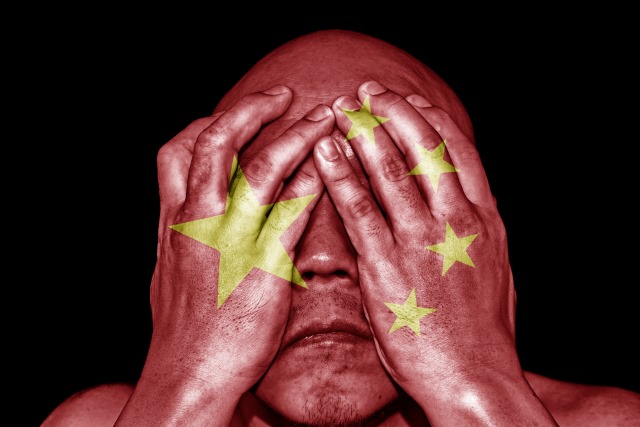
Facebook is ready to censor posts in China -- should users around the world be worried?
Facebook's relationship with China has a tense and turbulent history. The social network is currently banned in China, and this clearly takes a huge chunk out of Facebook's ad revenue. In a bid to keep Chinese authorities happy, Mark Zuckerberg has been involved in the creation of software that can be used to monitor and censor posts made by users.
In terms of playing by China's rules, this is clearly great news for Facebook, and it opens up the possibility of the social network operating in the country. While there is the slight silver lining that Facebook's censorship tool does not amount to a full blackout (as the Guardian puts it: "The posts themselves will not be suppressed, only their visibility"), the new program does raise a very important question: if Facebook is willing and able to create such a censorship tool for China, what’s to stop it doing the same for other markets, or even for its own benefit?
How will Facebook fight the fake news phenomenon? Poorly... and stupid, lazy users don't help
Facebook has many problems, but the most recent and prominent of them has been the issue of fake news. So serious is the problem, that some have blamed fake news stories on Facebook as being the reason Donald Trump is now president elect.
Mark Zuckerberg has made it fairly clear he doesn't subscribe to this particular idea, but he is certainly aware that fake news is a problem. Under pressure to do something about it -- bearing in mind that for a worrying percentage of people, Facebook is their only source of news -- Zuckerberg wants to not only make it clear that "we take misinformation seriously", but also that there are plans to tackle the problem. But they're not very good.
Facebook's Social Good Forum aims to improve the world with donations in live video and Community Help
Facebook just held its first Social Good Forum and used it to unveil a number of new tools and options focused around raising money to help out those in need. It also announced the expansion of the existing Safety Check feature.
The social network has faced criticism in the past for triggering Safety Check -- which lets Facebook users tells friends and family they are OK in the event of a disaster or crisis -- for some major events, but not others. Now Facebook is taking a hands-off approach: it can be triggered by the community. Another new feature announced is the arrival of Donate buttons in Live videos and posts.
Facebook's privacy-invading WhatsApp user data dipping ends in Europe
Facebook has stopped using data collected from WhatsApp users to customize ads in Europe. The move comes after the practice was banned in Germany, and after the UK's Information Commissioner announced an investigation.
The social networking giant had already agreed to stop using WhatsApp data from users in the UK, but this has now been extended on a Europe-wide basis. Last month Facebook was on the receiving end of criticism from the Article 29 Working Party who complained about the invasion of users' privacy.
Could alt-right account bans spell the end of Twitter?
Abuse and trolling has been a serious problem for Twitter for some time and continues to be so. Various measures have been introduced to help with the issues, but now the site is going down a more drastic route, banning prominent alt-right accounts.
This is not something that is entirely new; earlier in the year Breitbart's Milo Yiannopoulos (also known as @Nero) was permanently banned from Twitter. In the wake of Donald Trump's astonishing rise to presidency, the alt-right movement has enjoyed a major boost. The question is, does Twitter risk cutting off too many of its users if it continues its alt-right cull?

Twitter expands Mute feature to help combat its troll problem
Twitter has promised for some time that it will do more to tackle the problem of trolling, abuse and harassment. Today, the company announces that it is expanding its Mute features, giving users the ability to mute keywords, phrases, and conversations.
This comes in response to feedback from people who have long-asked for a way to prevent notifications about topics they are not interested in, from people they don’t want to hear from, and so on. Twitter also says that it has retrained its staff and improved systems to make it easier and more efficient to report and deal with cases of abuse.
Mark Zuckerberg denies Facebook influenced the US election, and vows to tackle fake news
In the wake of the election of Donald Trump as Barack Obama's successor as president of America, Mark Zuckerberg has spoken out to deny claims that Facebook in any way influenced the result of the US election.
Criticism of Facebook has taken various forms. One of the key complaints is that its news algorithms serve to create an echo chamber, exaggerating the already-present confirmation bias effect. But there are also concerns that fake news is a serious problem on the platform.
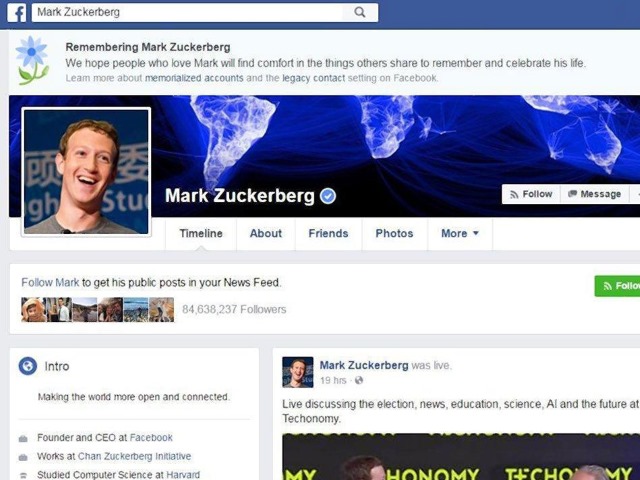
Facebook's Mark Zuckerberg is dead... maybe you are too
A "terrible error" has been blamed for the accidental virtual killing of a number of Facebook users, including none other than Mark Zuckerberg. Thousands of users of the social network logged into their accounts to find out they were dead after Facebook experienced a strange bug.
The accounts of many people were memorialized as friends were invited to "remember and celebrate" the lives of the "deceased". The mistake led to Facebook users having to reassure friends and family that they were OK and remained alive and kicking.

WTF?! Twitter saw a significant rise in swearing following Trump's win in US election
If you spend a lot of time on social networks like Facebook and Twitter, you probably thought Hillary Clinton was a shoo-in for president, and that Donald Trump had next to no chance of beating her.
As my colleague Ian Barker explains, social networks can create something of a bubble, that pops when the real world intrudes, as it did in both Brexit and the US election.
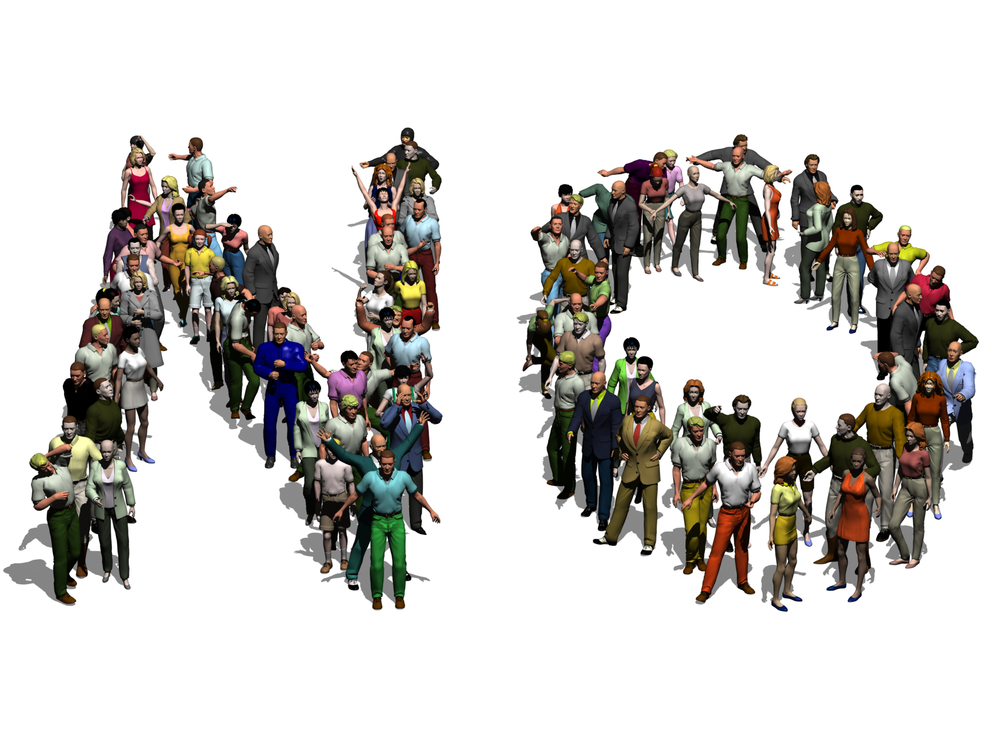
How social media bubbles are driving political anger
How could Donald Trump be elected president? Judging by Facebook and Twitter a lot of people are asking that question this week. The same thing happened in the UK back in June when many people struggled to understand how the country could have voted for Brexit.
When everyone you're friends with online reinforces your world view it's easy to convince yourself that most of the world thinks as you do. It comes as a bit of an awakening therefore to discover it isn't the case and that -- shock! -- there may be people who vote that aren't even on social media at all.
Facebook Messenger is now able to pump ads into your eyeballs
Facebook, like Google, is all about the ads. Not content with filling newsfeeds with advertising, Facebook Messenger -- already something of a privacy nightmare -- is about to become home to 'sponsored messages'. Ads by another name.
The new ad formats follow on from newsfeed data designed to direct Facebook users to Messenger, and from there the idea is to drive brand awareness and increase sales. But as with other advertising on Facebook, ads are targeted, meaning there is more than a slight degree of concern when it comes to privacy.
Facebook forced to stop using WhatsApp data to deliver targeted ads to users
Threatened with legal action if it failed to do so, Facebook has agreed to stop harvesting data from WhatsApp users and using that data to deliver targeted ads. The move comes weeks after the UK's Information Commissioner announced an investigation into the actions of the social network.
Facebook had already been blocked from doing this in Germany, and now the same restrictions are in place in the UK. With so much public interest in privacy, it is likely that other countries will follow suit in clamping down on Facebook's data collecting activities.