Logitech MX Keys Mini is a compact wireless keyboard for Windows, Mac, and Linux

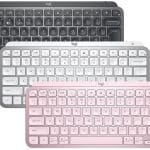
Number pads are pointless. Don't get me wrong, I am sure some older folks use them out of habit, but I -- and many other consumers -- never do. Quite frankly, since you can buy a dedicated number keypad if you truly need it, why burden everyone with them just to please a small group of people? As a result, many keyboards are longer than they need to be. While that doesn't sound so bad, it is an annoyance since it takes up valuable desk space -- especially with more and more people working from home these days.
Today, Logitech unveils a slim wireless keyboard without a number pad. Called "MX Keys Mini," it is notable for more than just being compact. The backlit keyboard can fast-charge using USB-C, and Logitech promises up to 5-months of battery life with backlighting off. With the lights on, you can expect up to 10 days of usage.
Microsoft Chrome OS is an amazing alternative to Windows 11

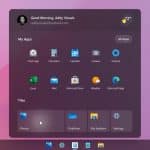
In a couple of days’ time, Microsoft is set to take the wraps off the next version of Windows. We already know a fair bit about this, thanks to a number of leaks, including a full ISO of Windows 11 which the software giant is currently scrambling to remove from the web.
The new operating system is based partially on Windows 10X, the scrapped lightweight operating system that was designed as a rival to Google’s Chrome OS. While that creation may never properly see the light of day in its original form, we can today get an idea of what Chrome OS would look like if Microsoft had developed it instead of Google.
A decade of Chrome OS: What do you think of it?

Let me get this out of the way first, lest I be called a Microsoft hater (I’ve been called both that and fanboy). I have Windows computers and I use them for some things, just not for my regular, daily routine. I started with a Chromebook early on when Google itself released the HP Chromebook 11 G1 back in 2013.
Chrome OS was announced in 2009 and an actual "Chromebook" shipped in 2011, but it took a couple of years from then for the platform to pick up steam.
Samsung unveils Galaxy Chromebook 2
Chromebooks are great laptops, and I recommend them all the time. Long gone are the days where a Windows computer was necessary. Quite frankly, most homes would be better served by a computer running the Linux-based Chrome OS than any Microsoft operating system. While power users and gamers may want to stick with Windows (for now), the average user should without question buy a Chromebook instead.
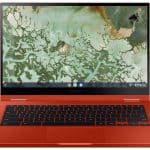
Best of all, Chromebooks are no longer just underpowered laptops -- many have great specifications and elegant designs. For instance, last year, Samsung launched the beautiful Galaxy Chromebook. Today, the company unveils the sequel, and it is quite impressive. Called "Galaxy Chromebook 2," the convertible laptop has a QLED touch display with FHD resolution. Samsung promises an enhanced audio experience too.
Acer unveils Chromebook Spin 513 laptop and Chromebox CXI4 desktop
Many people said it was impossible to bring desktop Linux to the mainstream, but guess what? Google did it. Yup, thanks to Chrome OS, there are countless people running Linux as their main desktop operating system every day. This is for home use, education, and business. During the pandemic, Chromebooks have been so popular that it can be hard to find one at a reasonable price.
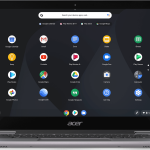
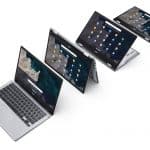
Acer has long been a proponent of Chrome OS, and today, the much-respected company unveils two new machines -- the Chromebook Spin 513 laptop and Chromebox CXI4 desktop. The Spin 513 is a convertible, meaning it can pull double-duty as a tablet when folded. Since Chrome OS supports Android apps and Google Play, it is a very good tablet experience too. It is powered by an ARM processor, which seems to be the future of computing.
Dell launches Latitude 7410 Chromebook Enterprise laptop and 2-in-1
When it comes to business, Chromebooks are still largely unproven. Look, I get it, it is hard to break dependence on Microsoft Windows and Office after so many decades. The thing is, as more workers move to web browser-based applications and cloud-based storage, Windows is becoming unnecessary for some businesses. Hell, because of malware and maintenance costs, Windows can be seen by some as a liability. With that said, in addition to Linux programs and Android apps, Chromebooks will soon be able to access Windows software too.
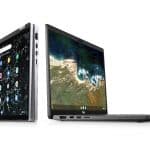
And so, it is looking like Chromebooks will eventually have a significant role in the enterprise. To highlight this emerging business-computing sea change, Dell (a major Windows partner) launches two new business-class Chrome OS computers today -- the Latitude 7410 Chromebook Enterprise laptop and 2-in-1. One is a traditional clam shell notebook, while the other also serves as a tablet.
Google teams up with Parallels to allow Chromebooks to run Windows apps

Initially derided as a limited modern take on netbooks, Chromebooks have gathered loyal followers over the years as app support grows. In addition to web apps, there is also support for Android and Linux apps, but Chromebook owners have long dreamed of the day they can run Windows software.
Thanks to a partnership between Google and virtualization specialist Parallels it will not be too long before Windows apps in Chrome OS becomes a reality. The bad news is that there is a slight caveat.
Chromebook owners get Android versions of DOOM and DOOM II for free -- Here's how

Chromebooks are wonderful computers. In fact, the underlying Linux-based Chrome OS is arguably the most secure desktop operating system on the planet. Yes, it is more secure than Windows or macOS. If you have to access a website for banking information or other sensitive data, a Chromebook is probably the safest way to do so.
With all of that said, they aren't just good for surfing the web or education, but for fun stuff too. Not only can you enjoy streaming media on a Chromebook, but you can actually do some light gaming too -- thanks to Android support and the Google Play Store. Two classic games -- DOOM and DOOM II -- are on Play Store for $5 a piece, but if you own a Chromebook, you can get both for free!
I'm back on Chrome OS with the Lenovo 100E Chromebook
The keyboard on my beloved Asus C206 died recently. I gave it life support, but it didn’t last long. For the past couple of weeks I’ve been using my Windows 10 laptop, and I like it. I use it regularly for tasks Chrome OS can’t do -- some programs just require Windows.
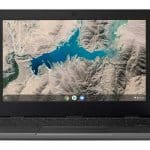
Now I’ve received a new Chromebook (new to me that is), the Lenovo 100E, and have been using it a little while. Let me tell you what I think of this iteration. Obviously, this is my opinion, yours may vary.
Google resumes Chrome and Chrome OS releases with an updated schedule

Google says that updates to Chrome and Chrome OS are the latest coronavirus victims
The impact of the coronavirus is being felt around the world in many ways. The pandemic is forcing people to work from home, impacting on deliveries and production in addition to being a health threat to many.
Now Google has announced that updates for both Chrome and Chrome OS are currently on pause. While the company does not say that this is a direct consequence of the spread of COVID-19, it says that the delay comes because of "adjusted work schedules at this time".
Chromebooks get 8 years of updates, and Microsoft's Windows 10 is the big loser

Many people publicly deride Chromebooks, but that is largely because of their ignorance. For instance, some will say the computers are nothing more than a "glorified web browser." Actually, Chromebooks run a secure Linux distribution called "Chrome OS." While the operating system does focus heavily on the web, that really isn't a problem nowadays. Since Wi-Fi is ubiquitous these days, doing all of your computing on the web is actually ideal. Who the heck isn't constantly connected to the internet anyway?
But OK, if you have a need for offline computing, that is totally possible too. Not to mention, Chromebooks can now run both Android apps and traditional Linux desktop programs -- there is a huge library of useful software just waiting to be installed.
Google announces end of support dates for Chrome Apps on Windows, Mac, Linux and Chrome OS
The end of support for Chrome apps has been a long time coming -- Google announced more than two years ago that it was going to start winding things down.
The Chrome Web Store has already been stripped of the App section on Windows, macOS and Linux, and now Google has announced that it is to be pulled from Chrome OS too. The company has also revealed the dates on which support will be dropped completely for all platforms.
Samsung Galaxy Chromebook is the elegant and powerful Chrome OS laptop the world has been waiting for
Google's Chrome OS has revolutionized desktop computing by stripping away the nonsense and allowing the user to focus on the task at hand. There is no clunky update system like Windows, nor is there the need for anti-malware software. Chromebooks just work, and they are very secure too. Best of all, they are often super affordable -- unlike Apple's overpriced MacBooks. While many folks can get by with web apps, the operating system also runs both Android apps and traditional desktop programs. If you haven't tried a Chromebook in a while, you will be surprised by just how great they are these days.
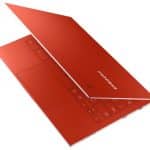
Today, Samsung announces a new premium Chrome OS convertible laptop that oozes elegance. The Galaxy Chromebook, as it is called, is just 9.9mm thin and features an aluminum chassis in either Fiesta Red or Mercury Gray colors. It has a built-in active stylus, 4K AMOLED display, and is powered by an Intel Core processor. It can even be configured with up to 16GB of RAM! It has the latest-and-greatest Wi-Fi 6 for connectivity plus two USB-C ports too. It even has a fingerprint reader -- a rarity for Chrome OS devices.
Google releases Chrome OS 78 complete with virtual desktops and more
The stable build of Chrome OS 78 is now rolling out to Chromebook and other compatible devices. A notable addition with this update is the arrival of virtual desktops, something Google has been testing in preview builds for a little while now.
Just as with Windows and macOS, the virtual desktop feature of ChromeOS gives users access to a number of workspaces that can be used to keep different apps and windows separate from each other. But while this is probably the highlight of ChromeOS 78, it is certainly not the only change.
© 1998-2025 BetaNews, Inc. All Rights Reserved. About Us - Privacy Policy - Cookie Policy - Sitemap.