
How to protect yourself from the WhatsApp 'backdoor'
Earlier today we reported about a security problem in WhatsApp that means it is possible for messages to be intercepted and read by others. The so-called 'backdoor' takes advantage of the fact that WhatsApp's implementation of end-to-end encryption makes it possible to resend encrypted messages using different security keys, allowing for third parties to read them.
What is concerning many people is the fact that (by default, at least) WhatsApp does not alert users when a message is resent using a different key -- which would be a warning of something going on. Here's what you need to do to ensure you are told when the key changes.

'Backdoor' in WhatsApp's end-to-end encryption leaves messages open to interception [Updated]
Facebook has long-claimed that its WhatsApp messaging service is completely secure and messages cannot be intercepted thanks to its use of end-to-end encryption. But researchers have unearthed what they call a serious security flaw that makes it possible to read encrypted messages.
Based on Open Whisper Systems' Signal Protocol, the unique security keys used to implement end-to-end encryption should keep messages secure. But WhatsApp can force offline users to generate new keys and this could allow Facebook -- and third parties -- to read messages.
Why is WhatsApp not working on your phone? Because it's too old
Welcoming the new year with a trumpet of doom, WhatsApp is bringing misery to many users. If you're using old versions of iOS, Android or -- heaven forbid -- Windows Phone 7, Facebook's popular messaging tool no longer works.
There is a brief stay of execution for anyone still packing a BlackBerry, but as of June 30 these will also be cut off. WhatsApp says that "BlackBerry OS, BlackBerry 10, Nokia S40 and Nokia Symbian S60" will stop working by the middle of the year, but it is the hundreds of thousands of Android and iOS users that will be hardest hit.
EU accuses Facebook of providing misleading information about WhatsApp acquisition
The European Commission could hit Facebook with a colossal fine for providing misleading information during its $19bn takeover of WhatsApp.
The social networking giant could be hit with a fine equivalent to 1 percent of annual sales (around $125m) for failing to correctly communicate planned changes to privacy policies. The data sharing between WhatsApp and Facebook is already the subject of investigations, but this latest accusation comes as a fresh blow.

Facebook's privacy-invading WhatsApp user data dipping ends in Europe
Facebook has stopped using data collected from WhatsApp users to customize ads in Europe. The move comes after the practice was banned in Germany, and after the UK's Information Commissioner announced an investigation.
The social networking giant had already agreed to stop using WhatsApp data from users in the UK, but this has now been extended on a Europe-wide basis. Last month Facebook was on the receiving end of criticism from the Article 29 Working Party who complained about the invasion of users' privacy.

Facebook forced to stop using WhatsApp data to deliver targeted ads to users
Threatened with legal action if it failed to do so, Facebook has agreed to stop harvesting data from WhatsApp users and using that data to deliver targeted ads. The move comes weeks after the UK's Information Commissioner announced an investigation into the actions of the social network.
Facebook had already been blocked from doing this in Germany, and now the same restrictions are in place in the UK. With so much public interest in privacy, it is likely that other countries will follow suit in clamping down on Facebook's data collecting activities.
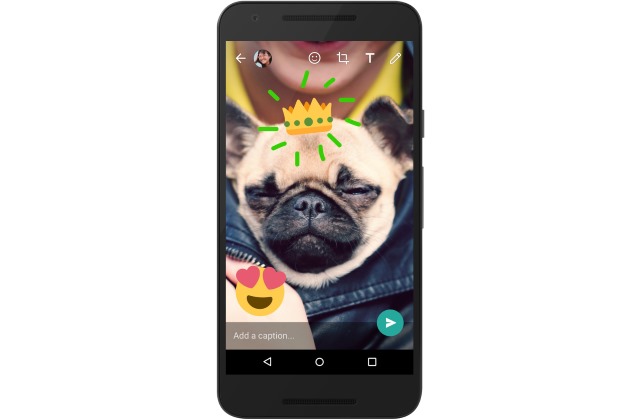
WhatsApp copies SnapChat and allows you to add emoji to photos... and more
Until concerns were raised about data sharing with Facebook to help deliver targeted ads, WhatsApp was seen as the messaging tool of choice for those concerned about privacy. As well as offering encrypted messaging, WhatsApp has always been one of the more stripped back messaging apps out there -- but no more.
Bowing to pressure to fit in with the crowd and offer the same features as the likes of SnapChat, WhatsApp is adding photo and video editing and enhancement tools. The ability to add emoji to photos, or draw and write on images are just two new options that are rolling out now.
Germany bans Facebook from collecting WhatsApp users' data
Germany has decided to ban WhatsApp and Facebook from sharing user data with one another as consumers did not agree to the data sharing deal between the two companies.
Last month, it was announced that WhatsApp would begin sharing the data it collected from its users to Facebook. The social network would then use that data to help it better serve ads and generate more information from the people using the popular messaging app.
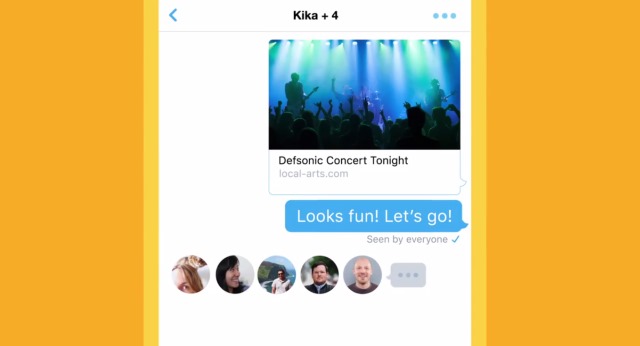
New features for Twitter Direct Messages transform it into a chat platform
The market for chat and messaging tools is a busy one, with the likes of WhatsApp, Facebook Messenger and countless others all vying for attention. Keen as ever to appeal to as many users as possible, Twitter is constantly trying to reinvent itself, and it's currently doing this by revamping its Direct Messages feature.
Having already dropped the 140-character limit some time ago, Twitter has now introduced even more features that make it more chat-friendly. Among the changes is a typing indicator which lets chat participants know when others are responding to messages.
Information Commissioner to investigate data sharing between WhatsApp and Facebook
WhatsApp's plans to share user data with Facebook are to be investigated by the Information Commissioner's Office (ICO) in the UK. The change in privacy policy goes against a previous public commitment not to share data in this way.
The ICO has the power to regulate how companies make use of data belonging to people located in the UK, even if the companies themselves are located elsewhere. A key concern is whether there will be compliance with data protection laws.
WhatsApp's new privacy policy reveals it will share data with Facebook for targeted user ads
The ever-popular messaging tool WhatsApp is to start sharing more user data with its parent company Facebook. The updated privacy policy means that WhatsApp will now share users' phone numbers with Facebook to "offer better friend suggestions and show you more relevant ads".
The updated policy also communicates the fact that end-to-end encryption has rolled out, but it is the privacy side of things that will be of greater interest to many people.
Europe wants to control the likes of WhatsApp and Skype like telcos
The EU is looking to exert greater control over online messaging tools such as WhatsApp and Skype. Documents seen by the Financial Times suggest that Brussels wants to treat such services more like traditional telecoms companies.
The proposals come amid mounting privacy concerns about data handling, particularly the "security and confidentiality provisions" from companies like Microsoft and Facebook.
WhatsApp doesn't properly delete 'deleted' chats
A security researcher is warning WhatsApp users that their chats can be retrieved even after they have been deleted, cleared, or archived. Jonathan Zdziarski says that even using the 'Clear All Chats' option leaves behind a 'forensic trace'.
He warns that the only way to be certain that your chat history is deleted, is to get rid of the app entirely. The problem appears to stem from WhatsApp's use of SQLite which fails to overwrite deleted data by default, rendering it recoverable.

Protests from Apple and Microsoft mean there won't be a rifle emoji
With the unstoppable growth of chat apps such as Facebook Messenger, WhatsApp and the like, emoji have become an incredible phenomenon. The Unicode Consortium is due to publish the Unicode 9.0 spec tomorrow, and it seems that objections from Apple and Microsoft means we're not going to see a rifle emoji included.
The intervention is slightly surprising, yet not entirely unexpected. With the large number of high-profile mass-shootings such as in Orlando, debate about guns has come to the fore once again and the censorship of emoji is perhaps not completely unexpected. But at the same time, there is already a pistol emoji and there are not -- yet -- calls for it to be removed.

WhatsApp says "what's up?" to Windows and Mac
Back in the day, I remember AOL Instant Messenger and ICQ being all the rage for messaging. For a while, MSN and Yahoo! Messenger were popular with the young folks too. Nowadays it seems to be Facebook Messenger and WhatsApp, which is a bit weird, because Facebook owns the latter -- hopefully they merge eventually.
One of the frustrating things about WhatsApp, however, is that it does not have a desktop client, instead being web and mobile only. Well, now this changes. Today, the messaging solution gets an official client for both Windows and OS X -- sorry Linux desktop users. At least that aforementioned web version is available.