Archos announces the GamePad 2 -- Nintendo and Sony competitor?

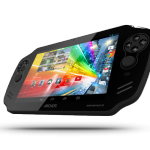
I used to exclusively be a home console gamer -- I preferred playing games on a TV screen as opposed to a tiny handheld display. Heck, I even grew up during the GameBoy era but never got one. The NES was a better option for me, as portability was not a need at the time. Truth be told, I didn't get into mobile gaming until I got my first Android phone. Since then, I play all of my games on a smartphone or tablet. Sadly, platformer games are my favorite genre and virtual d-pads are a poor experience. I have always dreamed of an Android device with dedicated gaming buttons.
In July, the NVIDIA Shield was released. However, it serves as a dedicated gaming handheld -- it cannot realistically replace a tablet. It didn't make financial sense to buy both a tablet and the NVIDIA handheld. Today, Archos announces a new Android-based, 7-inch tablet that also serves as a gaming machine, called the GamePad 2 (the successor to the GamePad 1). In other words, it combines the functionality of a Nexus 7, with the gaming controls of the NVIDIA Shield. Amazingly, the company is releasing the product in Q4 of 2013, for the low price of $199.
Twitter and Comcast announce See It -- control your TV with tweets

Folks are increasingly using Twitter while watching their favorite TV shows. A couple of days ago, Nielsen announced that viewers were becoming more engaged with television as a result. However, I argued that this could potentially distract users from both the programming and advertising. Today, Twitter and Comcast announce a partnership that looks to bring users to the TV with the power of tweets, rather than pull them away, with a feature called See It.
"It's a simple, but exciting tool that helps people more easily watch the shows they read about or discover online. See It lets people tune-in or record their favorite shows -- directly from the conversations happening on Twitter. In a typical week, #thevoice generates more than 350,000,000 Twitter impressions. What’s missing is how to seamlessly move from that conversation to consumption. And that's where See It comes in", says Sam Schwartz, chief business development officer at Comcast.
Google releases a refreshed Quickoffice for Android and iOS -- for free
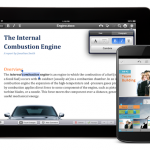
When I bought the first-generation iPad in 2010, I intended to use it for taking notes in college classes. Unfortunately, the iPad didn't come with an office suite and Microsoft's was not available. And so, I was forced to try a bunch of alternatives. Ultimately, I found one that stood out among the rest -- Quickoffice. I found it to be complete and a pleasure to use.
While my iPad is long gone, Quickoffice has followed me to Android with great results. However, Google bought my beloved Quickoffice in June 2012 and I became very nervous. My concern was that the software development would cease under Google's leadership. I am happy to say that my concerns were for naught -- Google announces today that QuickOffice has been updated and is now free.
Smartphones to cannibalize tablets, but it's the PC getting eaten


Tablets are where the growth is right now, with sales of touch devices eating away at the market share of traditional PCs. But that’s not the only cannibalization going on in the tech world. The iPad mini certainly impacted on sales of the standard-sized iPad upon launch. And with the line between tablets and smartphones becoming increasingly blurred, market analysis firm IDC predicts large-screen (5+ inch) smartphones will start to gnaw away at the smaller (7-8 inch) tablet market from 2014.
"The device world has seen several iterations of cannibalization impacting different categories, with the last few years focused on tablets cannibalizing PC sales," Bob O'Donnell, Program Vice President, Clients and Displays, observes. "Over the next 12-18 months, however, we believe the larger smartphones, commonly called 'phablets', will start to eat into the smaller-size tablet market, contributing to a slower growth rate for tablets".
Enterprise security at risk in the post-PC era


Almost three quarters (73 percent) of US-based office workers with enterprise-issued tablets have used them to download personal software and apps. A new survey carried out for content collaboration specialist Huddle by IPSOS-Mori reveals this and other potential security risks resulting from blurred lines between personal and enterprise devices.
The nationwide survey of 2,000 US office workers shows that 62 percent download personal software to company-owned smartphones and 45 percent do the same on laptops. The majority of the 44 percent of office workers using company-issued devices download personal software such as iTunes, Spotify and Dropbox. In addition 52 percent admit to storing, sharing and working on work documents via their personal smartphones, tablets and laptops.
Lenovo IdeaPad Yoga 11S -- Windows 8 done right [Review]
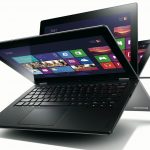
My relationship with Windows 8 is very tumultuous; sometimes I love it and sometimes I hate it. However, this is due to the inherent problem with Windows 8 -- depending on what you are doing with it or what hardware you are using it on, the experience is different. I have used Windows 8 devices that are wonderful and others that are horrible. I often ponder, what if there was a device that could change based on what I was doing? I am happy to say, such a device exists and its called the Lenovo IdeaPad Yoga 11S.
The name "Yoga" is very appropriate as the convertible laptop offers multiple positions. No, I am not talking about the downward-facing dog -- this device can be a laptop, tablet and desktop. Lenovo calls these modes "Laptop", "Tablet", "Tent" and "Stand". However, "Tent" and "Stand", in my opinion, have duplicate functionality -- I refer to both of these as "Desktop Mode".
More gloom for PC makers as European sales slump by 20 percent

As my colleague Wayne Williams reported earlier today the PC market is continuing to shrink at the hands of tablets. Further confirmation of this, just in case you needed any, comes from a Gartner survey showing that the PC market in western Europe slumped by 20 percent in the second quarter of 2013.
All PC segments in Western Europe declined over the quarter. Mobile and desktop shipments dropped 23.9 percent and 12.2 percent respectively. PC shipments in the professional market declined by 13.5 percent, while the consumer PC market decreased 25.8 percent in the same period. This equates to a 19.8 percent drop overall
The good ship PC continues to sink -- all aboard the tablet lifeboats!

The worldwide PC market continues to experience few signs of growth, with a healthy increase in global tablet shipments merely helping to offset the continuing descent of traditional desktop and notebook systems, according to independent analyst firm Canalys.
While tablet shipments saw a 42.9 percent increase compared with this time last year, desktop and notebook shipments fell 7.4 percent and 13.9 percent respectively. Total shipments for PCs (Canalys lumps desktops, notebooks and tablets together) delivered a 0.3 percent growth for the year.
Intel announces Education Tablets -- powered by Android and Atom
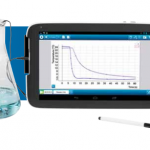
Tablets allow students to leverage technology to improve learning. An iPad for instance, can offer a more immersible experience when compared to a paper textbook. While there are many educational based applications for Android and iOS, there hasn't been a serious education-focused tablet from a major manufacturer -- until now. Intel has announced a new line of Android-based tablets designed for learning.
According to Intel, the tablets "...available in 7-inch and 10-inch sizes, are designed specifically for education and built to meet students' needs. The multi-touch display and e-Reader software enable students to access rich online content. Ultra-portability allows them to take the device to the field to capture data with the built-in camera and analyze it with Intel Education Software. They can collaborate with their classmates, while comparing their findings to others on the web".
Surface sales are pathetic

It feels like repeatedly kicking someone when they’re down, but there’s really no other way to describe Windows tablet sales -- both RT and Windows 8 Pro -- other than pathetic and embarrassing for Microsoft. Which is a shame. Surface is a great tablet, Windows 8 on Surface is a good operating system, but people just aren’t buying the device in any great numbers. Well, pre-fire sale at least.
According to a new report from IDC, just 200,000 Windows RT tablets shipped in Q2 2013 (even the ailing BlackBerry PlayBook managed 100,000), and there’s no good news for other Windows tablets either as IDC reports just 1.8 million devices shipped with that OS onboard. Apple, by comparison, shipped 14.6 million iPads in the same quarter.
Windows 8 and RT tablets lagging far behind the competition

Windows 8 is an operating system designed for touch PCs, but it's struggling to find a sizeable audience on them. PCs as we know them are on their way out, and tablets are the future, as we've been told time and again by analysts. Figures from the likes of Gartner and IDC clearly back up this sea change.
So if people aren't buying into Microsoft's new OS on regular PCs (with or without touch) then they must be scrambling to buy tablets running Windows 8 and RT surely? Well things don't look too rosy for Microsoft there either.
Now TV box is cheap alternative to Apple TV for UK viewers, but with a catch

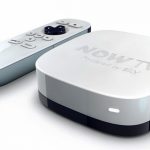
Like the idea of Apple TV but feel the hardware is a little expensive? Today Sky releases its Now TV Box to UK fans for the ultra-low price of £9.99. This is significantly cheaper than Apple's flagship streaming device, and even manages to undercut Google's Chromecast. With the price tag including not just the device itself, but also delivery, there's got to be a catch, right?
The WiFi streaming box provides access to on-demand content from the broadcasters such as Sky, BBC and Channel 5, including sports and movies. There's also the option of using apps such as Spotify and Facebook to transform a regular TV into a smart TV. So far, so couch potato.
British women enjoy fondling 7 inchers (and larger)

According to YouGov's latest Tablet Tracker report there are more women owning tablets than men in the UK. The study says that in May, 52 percent of the country's touchscreen computers were in female hands, an increase of nine percent compared with the same time last year.
Over the same period, the share of tablets owned by men fell from 57 percent to 48 percent. There’s no equivalent report for female tablet ownership in the US, but I wouldn’t be surprised to see it following a similar trend. Tablets are ideal for women.
Don't blame Windows 8 for terrible PC shipments


It's no secret that the PC market has slowly taken a turn for the worse. And, if we're to believe what research company IDC said in late-May, it's not going to get any better anytime soon, with shipments predicted to drop even further, by 7.8 percent this year. Furthermore, tablets are expected to out-ship PCs by 2015. Unquestionably, the future appears gloomy but, according to Gartner, the culprit is not the controversial Windows 8, as some pundits believe.
Gartner just released its latest report on the state of the PC market, which shows that Q2 2013 shipments -- which top 76 million units from all vendors, combined -- have declined by 10.9 percent compared to the same period, last year (when shipments exceeded the 85.32 million mark). "The sharp decline in the second quarter of 2013 was partly due to the shift in usage patterns away from notebooks to tablets, and partly because the PC market was exposed to inventory reductions in the channel due to the start of the transition to new Haswell-based products", says Gartner principal research analyst Isabelle Durand.
HP Slate 21 -- Android invades Microsoft territory

Just when I thought I was out, they pull me back in! Only days after selling my Nexus 7 and preparing for a life without tablets, HP pulls me back by announcing the Slate 21. The HP Slate 21 is a tablet masquerading as a desktop -- a 21.5-inch touchscreen tablet with kickstand, keyboard and mouse. This unique all-in-one form factor has me very intrigued. However, this is not the first time we have seen Android being used in an original way. Just last week, Samsung announced the convertible franken-tablet ATIV Q.
While the Samsung ATIV Q is designed to merge Android and Windows, the HP Slate 21 is designed to put a dagger into the back of Windows. Make no mistake, this is a huge blow for Microsoft. While this isn’t HP’s first Android device, the Slate 21 is its first to directly compete with Microsoft on the desktop. Since HP is a close Microsoft partner, it will be interesting to see how their relationship will be affected.
Recent Headlines
Most Commented Stories
© 1998-2025 BetaNews, Inc. All Rights Reserved. About Us - Privacy Policy - Cookie Policy - Sitemap.