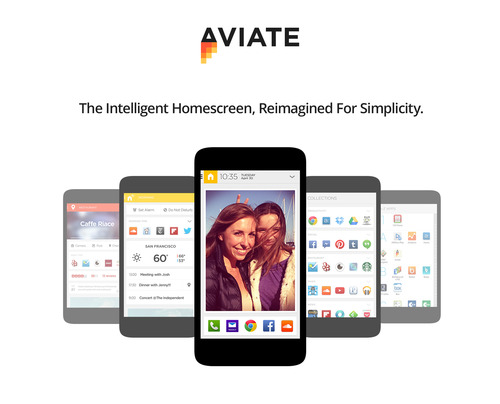
Yahoo buys Android launcher Aviate
For many people, one of the great things about Android is the ability to customize. While iOS offers the ability to change your wallpaper, customization pretty much stops there. Google's mobile operating system is quite different, since it permits the installation of different launchers. If you aren't familiar, a launcher is essentially the UI. In other words, a user can change not only the look of their device, but how they interface with it too. Many manufacturers ship devices with their own launchers, rather than the stock variant. Luckily, if the consumer dislikes the one that comes with their Android device, they can download a different one such as Nova or Apex; two very popular launchers.
However a relatively new launcher has been taking the Android community by storm -- Aviate. Part of the allure of this launcher is that it is invite-only. However, once invited, the user can then invite five people. This allowed Aviate to spread virally; after all, people desire what they can't have. Apparently, Marissa Mayer did not want to wait for an invite. The Yahoo CEO had the company buy Aviate outright. Does this signal a future Yahoo smartphone?

McAfee name set to disappear in Intel rebranding
Yesterday's speech at CES by Intel CEO Brian Krzanich contained lots of stuff about plans for wearable technology and computers housed in SD card form factors.
But also in there was the announcement of a new Intel Security brand and the news that McAfee products will transition to this over time. Krzanich also says that Intel is planning to offer some elements of McAfee security products free of charge to protect the latest mobile devices.

Windows Phone still struggles to gain considerable traction in China, Japan, US
Windows Phone may have managed to overtake Apple's iPhone in a small number of markets, based on sales, and become the third most popular smartphone operating system, but it -- and the devices that run it -- do not get much love from US consumers who are still buying Android smartphones and iPhones in droves.
Based on a new report from Kantar Worldpanel ComTech, in the US Windows Phone continues to struggle to gain considerable traction as the OS only had a paltry 4.7 percent market share, in the three months ending November 2013. This may represent a whopping 80.76 percent increase compared to the same period from 2012, but it is not large enough to even remotely threaten the local dominance of either Android or iOS. The results of the report are based on smartphone sales.

Android set to pass the billion user mark as device shipments grow in 2014
A new market forecast by research specialist Gartner predicts that device shipments (that's PCs, tablets, ultramobiles and mobile phones -- no toasters or coffee makers) will reach 2.5 billion units in 2014, up 7.6 percent from last year.
It also sees Android passing the one billion user mark across all devices this year, with 75 percent of Android volume coming from emerging markets by 2017.
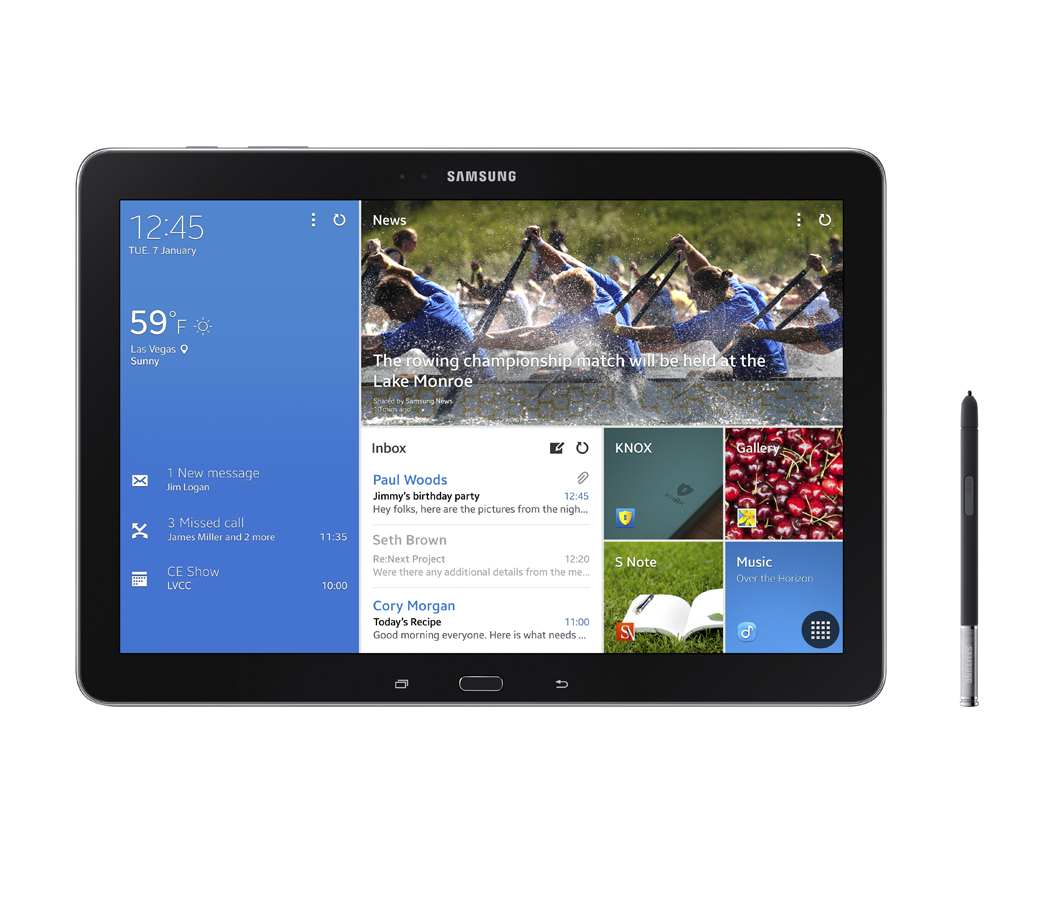
Samsung Galaxy Pro tablets are 12.2-inches of fondle-friendly productivity
When it comes to tablets (and other things), size matters. After all, a tablet, like other computers, is a tool. If you go to Sears for a screwdriver, you will find tiny ones for eyeglasses and enormous ones for automotive and lord knows what. In other words, you buy the tool that meets your needs. Much the way that different-sized screwdrivers have different purposes, so do tablets.
For instance, if you want to create content, a larger tablet like an iPad Air or Surface 2 would be ideal. Conversely, if you only want to consume media, maybe you can get by with a Nexus 7. But what if you need your tablet for serious business? Like, multiple-windows-open-simultaneously type business? The bigger the better then, right? Well, Samsung announces that it wants to meet the unmet needs of these users, with the Samsung Galaxy NotePRO and TabPRO -- 12.2 inches of fondle-friendly productivity.

Android hits the road with Audi, GM and others
Android is certainly no stranger to your car, as we all carry our devices along wherever we go, though hopefully you aren’t using yours as you drive. Now Google aims to take the idea of Android in vehicles and improve upon it, in much the same way that Ford has done with Sync.
The company announces a new Open Automotive Alliance bringing together Android with Audi, GM, Honda, Hyundai and Nvidia. The effort aims to make your mobile device more useful and much less distracting when you are out on the road.
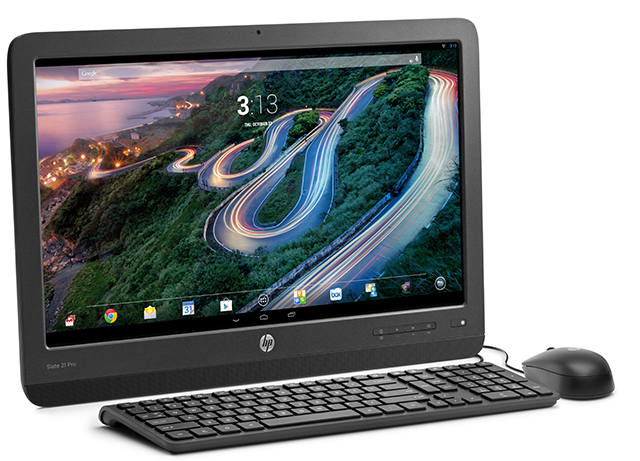
HP puts Android on the business desktop
All-in-one PCs are popular in the office and in customer-facing environments because they’re stylish and take up less space than conventional models.
HP has been an active player in this field for a while and has now updated its range of all-in-one (AiO) models with four new systems including -- for the first time -- one that runs Android.
Google takes Timely alarm clock developer Bitspin under its wing
Google may have just announced the closure of Flock and Bump, but it's not all about closures -- there are also acquisitions taking place as well. The latest addition to the Google fold is Bitspin. The name of the company may not be immediately familiar, but this is the company behind the Android alarm clock app Timely. At this stage it is not clear whether the company has been bought outright by Google or if there is a partnership in the cards, but there is certainly something afoot.
An announcement on the Bitspin website says:

Google does it again -- kills Bump and Flock
It's becoming quite a trend with Google. Buy up an interesting company or service, sit on it for a little while… and then shut it down. The latest victims of Google's seemingly never-ending cull are Flock and Bump. Bump was only acquired back in September, but it is already on the kill list. At the time of the acquisition, there was debate about whether the service might be rebranded, but as of the end of January it will be no more.
Bump was, in its day, quite an innovative tool, seen by many as the precursor to NFC. It enabled files to be quickly transferred between devices by bumping them together. Flock was a similar tool, but concerned solely with photo sharing. However as of 31 January, both apps will disappear from view, as announced in a blog post by CEO and co-founder of Bump, David Lieb:
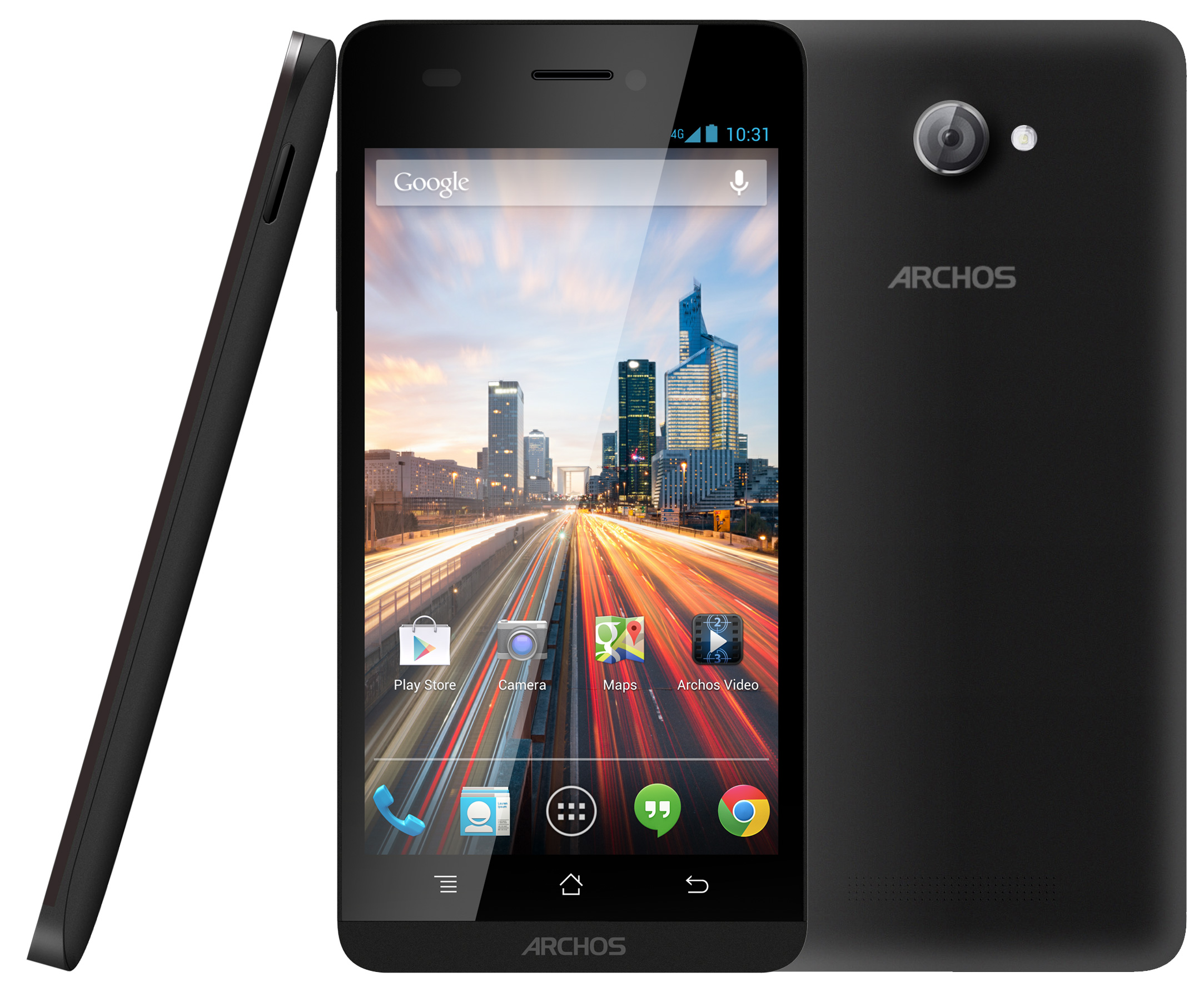
Archos announces two affordable 4G LTE Android smartphones
As mobile operators across the globe continue to roll out 4G LTE networks, more consumers will be able to take advantage of faster data speeds. By 2017, market research firm Strategy Analytics predicts that the technology will reach 1 billion connections. The main requirement, on the user side, is a compatible, 4G LTE device.
Nowadays, 4G LTE smartphones are increasing in number and availability, but without mobile operator subsidies consumers may still be put off by the cost. Luckily for price-conscious buyers, more vendors are lowering the admission bar by offering even more affordable 4G LTE phones. French consumer electronics company Archos just revealed that one of its latest such devices can be had under the magical €200 mark.
Microsoft updates OneNote for Android with major new features
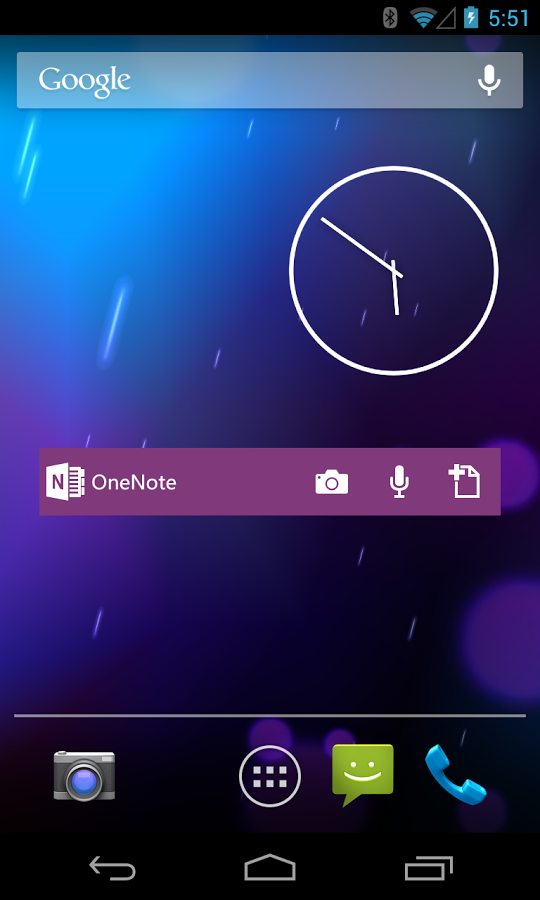
Right before the end of the year, Microsoft releases an update for its OneNote Android app which adds major features and improvements, as well as better integration with the mobile operating system.
OneNote now makes it easier for Android users to share content from another app, as the new version of the note-taking software introduces an Add to OneNote option in the OS' Share via menu. Rival players like Evernote have offered this feature for quite some time, so it's nice to see that Microsoft is paying attention to the competition and enabling a more tailored user experience.

What do YOU want from technology in 2014?
As 2013 winds down, my colleagues have been busy talking up their resolutions for the coming year. But, like Ian Barker, I don’t actually have any of those -- they'd likely just serve as embarrassment when I failed to deliver on my promises.
I don't have a problem with backups -- I pay for Crashplan to take care of that for me, so I never need to think about the potential for disaster. I don’t resolve to use a particular product, as others have. I simply utilize whatever is available at the time, and I'm in a fortunate position to frequently have the latest, though it isn’t always the greatest, hardware.

The collapse of the internet and other things to look forward to in 2014
It's inevitable that at this time of year tech companies and analysts like to try to grab headlines with their predictions for the coming 12 months. Security specialist Kaspersky Lab is no exception, and guaranteed to make waves is its forecast of the collapse of the internet as we know it.
This, it says, will be driven by pressure to break the web up into national segments. So far this has only applied to counties like China with its Great Firewall, but other nations including Russia have planned legislation to prohibit the use of foreign services. In November, Germany announced that all communications between the German authorities would be fully locked within the country. Brazil too has announced its plans to build an alternative internet channel so as not to use the one that goes through Florida.

My favorite tech products of 2013 [Mark]
This past year has been incredibly busy, and a huge amount of hardware has passed through my hands. Some of it has impressed, a lot has disappointed, but a handful was great enough to make it to my list of favorites for the year.
While I've tried out a great deal of software, this has been a year in which it has been hardware that has caught my eye. So here it is: my favorite tech from 2013.
The most popular stories on BetaNews this past week -- December 22 - 28
This hass been a much quieter week than usual with Christmas meaning that many companies have been on a virtual shutdown. But there has still been a bit of activity over the past seven days. We've reached the end of the year and the BetaNews team finds itself in a reflective mood. Mihaita was the first to pick his favourite tech products of the years, and Wayne wasn't far behind. Brian also got in on the action and Ian shared his thoughts as well. Bing also took a look back at the year, putting together a list of the top ten homepage images of 2013.
A delay at UPS meant that the delivery of many Christmas presents was held up, but if the delivery man did manage to make his way to your door in time to bring you a Surface 2, Brian has a guide to getting started. Alan was also on hand to help anyone who was the lucky recipient of a Kindle Fire HDX or a Google TV. Many people will have received, or bought themselves, a Windows 8.1 PC: Wayne had the info you need to get started.