U.S. smartphone adoption is lowest in developed world, South Korea highest


Today at Mobile World Congress, Nielsen offered a snapshot of the global mobile consumer based on a report released this month. Some of the findings are quite startling. For example, mobile phone usage is highest in South Korea -- get this, 99 percent among consumers older than 16. Same goes for smartphones (67 percent). By comparison, the United States has the lowest smartphone adoption among developed markets (53 percent). Now contrast that to China, where two-thirds of handset owners have smartphones, while in India 80 percent have feature phones. In Brazil, feature phones and multimedia handsets combined: 65 percent.
Mobile phone usage is high in many countries, but infrastructure is not. For example, 98 percent of Russians have mobiles, as do 84 percent in Brazil and 81 percent in India. Problem, according to Nielsen: "The network infrastructure required for smartphones and next generation mobile devices has yet to appear outside of large, urban centers". Lacking infrastructure explains some of this week's MWC announcements, such as Firefox OS phones or new Nokia Lumias with fewer smartphone features for lower selling prices going to emerging markets first.
ZTE debuts monster 5.7-inch Grand Memo

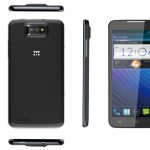
How big is too big for a phone? I would have said that my 4.65-inch Galaxy Nexus is large enough, but the 5.5-inch Galaxy Note II proves me wrong and must admit after picking one up I think it is usable as my everyday phone. Now ZTE trumps Samsung today at Mobile World Congress by unveiling the Grand Memo -- a "phablet" with 5.7-inch screen. Smartphones continue to meld with tablets.
The new ZTE model debuts with a nice set of specs: Qualcomm Snapdragon 800 processor with quad-core Krait CPU, extremely generous 3200 mAh battery, 5.7-inch 720 x 1280 display, 2GB of RAM, 16GB of storage, WiFi, 4G LTE, Bluetooth 4, a 13-megapixel rear-facing camera, and rather standard 1MP front-facing camera. All of this is packaged in a very thin 8.5 mm case.
Could Mobile World Congress 2013 be any more boring?

I'm not loving this year's big phone trade show. The news coming out of Barcelona is about as doldrums as the Spanish economy. Generally, the big stuff drops Day 0 and Day 1 at Mobile World Congress. They're done, and so far the product announcements are generally less than last year. The phone launch seemingly everyone waits for, Samsung Galaxy IV, comes in March. That's big commentary on what's missing from MWC 2013.
So far, I would call most new gear as the race to the bottom -- same concepts as the last couple of years, only offering less, selling for less and marketed to less-developed smartphone or tablet markets.
IT spending shifts from PCs to cloud, smartphones and tablets

Cue the violins. IDC says that the cloud, smartphone and tablet are reshaping IT spending, using the word personal computing defenders despise: "Cannibalization". There's a reason I dismiss the post-PC moniker for cloud-connected device era.
"Cannibalization is happening across the industry" Stephen Minton, IDC vice president, says. "Smartphones have taken over from feature phones, tablet adoption is impacting PC spending, and the cloud is affecting the traditional software, services and infrastructure markets". And you people wonder why Google would make in Chromebook Pixel a high-end cloud computer. It's the future, baby.
Nokia brings the new Here apps -- Drive Beta, Maps and Transit -- to other Windows Phone 8 devices


Nokia's augmented reality, map and navigation apps for Windows Phone just went through a name change, and now bear the HERE branding. As interesting as that may sound (which it doesn't, really) there is an even bigger announcement. HERE Drive Beta, HERE Maps and HERE Transit, which were formerly exclusive to Nokia devices, are now available for "any Windows Phone 8 smartphone".
Well, not for any Windows Phone 8 smartphone -- the three apps are only available for users in Canada, France, Germany, Italy, Mexico, Spain, UK and US. That said, I have installed HERE Maps outside of a supported location and it works fine, without any apparent limitation. HERE Drive Beta and HERE Transit report an unsupported location and as a result neither works for me.
Up yours Apple! Samsung to launch Galaxy S IV in the US next month


Samsung might have received a $1.05 billion bloody nose in its battle against Apple last year, but the South Korean giant is coming back fighting, by launching the next version of its flagship smartphone on US soil next month. The first such launch in three years.
Confirmed today at the Mobile World Congress in Barcelona, and in a tweet, Samsung will be unveiling the Galaxy S IV in New York as part of the Samsung Unpacked event on March 14.
Nokia announces two new Lumia smartphones
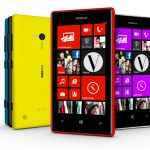
Nokia has just confirmed two new Lumia smartphones at the Mobile World Congress in Barcelona. The entry-level Nokia Lumia 520 will be priced at $185 (before taxes) off contract, while the mid-range Lumia 720 will cost $338 (also before taxes).
Nokia now has five Windows Phone 8 devices, covering all price points and making it easier for would-be customers to find a model that suits their requirements and budget.
Firefox OS races for third place
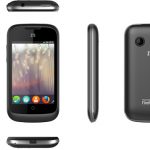
Mozilla means serious business about Firefox OS, if today's Mobile World Congress announcement is any indication. Timing couldn't be more serious. Gartner says there is little room for a third smartphone platform; in fourth quarter, Android and iOS dominated with 90.1 percent share, based on actual sales. The race for third place is on, with BlackBerry and Windows Phone established, but weak, contenders.
Mozilla proposed Firefox OS nearly two years ago, when BlackBerry OS still had appreciable market share and smartphone growth was strong. But as the first Firefox OS devices come to market, much is changed. Mature markets already rapidly saturate, China is the largest for smartphones, feature phone share is expected to fall below 50 percent this year and Samsung has replaced Nokia as global handset leader. The best place for a newcomer, based on who will partner and where there is room to grow: Second-world and emerging markets -- and that's where Firefox OS is headed.
Apple nearly catches up to Samsung in smart-connected device shipments

Analysts wouldn't generate new business without something fresh to sell. So they create new categories to tabulate, or dream up strange labels to describe them. Few quarters back, IDC rolled up PCs, smartphones and tablets into the "smart-connected devices" segment. Four things counted separately became something new, which also give schmoes like me something else to write about.
Yesterday, while my heart nearly failed writing about Chromebook Pixel, IDC released numbers for the segment, claiming 28.3 percent growth for fourth quarter and 29.1 percent for all 2012. Samsung nudged ahead of Apple to top the category for the quarter, with slightly wider lead for the year. Considering that smartphones make up 60.1 percent of the segment, the top-five ranking makes sense: Lenovo, HP and Dell follow the leaders. The two bottom-feeders mostly sell PCs, which lost share year over year.
LG, wake up! The Optimus G arrives too late in Europe
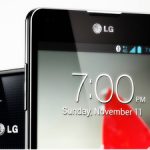
There's a great saying that applies to new products -- get it while it's hot. Or shall I say, give it while it's hot. LG, sadly, is not familiar with either expression as the South Korean manufacturer has only now finally released the Optimus G on European soil. That's a whopping six months (well, nearly) after the smartphone's unveiling in late August, last year.
LG is its own worst enemy right now. The main problem with the late Optimus G release, apart from the obvious waning of initial interest, is the smartphone's bigger brother -- the Optimus G Pro -- and the plethora of new devices that were released after the Optimus G, with better specs and time advantage on their side. And we haven't yet reached MWC (Mobile World Congress) frenzy yet, where manufacturers are known to release or announce even more products.
LG expands Optimus smartphone lineup with the new F5 and F7
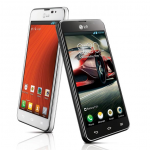
On Thursday, South Korean mobile device manufacturer LG unveiled the new Optimus F series, comprised of two smartphones, the Optimus F5 and the Optimus F7, that will debut at MWC (Mobile World Congress) in Barcelona, next week.
The Optimus F series slots under the Optimus G lineup, the latter of which includes the Optimus G and Optimus G Pro Android flagship smartphones, sporting smaller displays and less powerful processors. Both the Optimus F7 and the Optimus F5 ship with Android 4.1.2 Jelly Bean out-of-the-box and 4G LTE cellular connectivity. But what separates the two?
Qualcomm details the Snapdragon 200 and 400 processors for entry level and mid-range devices
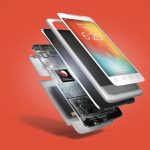
After unveiling the Snapdragon 600 and Snapdragon 800 at CES 2013, American mobile giant Qualcomm has on Wednesday taken the wraps off two new processors. The Snapdragon 200 and Snapdragon 400 join the company's latest lineup for smartphones and tablets, targeting the low-end and mid-range mobile market.
The Snapdragon 400 is the mid-range mobile processor and, to some extent, resembles the now-traditional Snapdragon S4 found in a number of currently-available smartphones such as the HTC Windows Phone 8X, Nokia Lumia 920 or Samsung Galaxy S III (US variants). The Snapdragon 400 features dual-core Krait CPUs with speeds of up to 1.7GHz per core or quad-core ARM Cortex-A7 CPUs with speeds of up to 1.4GHz per core.
ZTE will launch Nvidia Tegra 4-based smartphones, but not soon
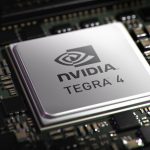
Qualcomm's new Snapdragon processor lineup has cast a shadow over Nvidia's Tegra 4 ever since its CES 2013 unveiling in Las Vegas. Especially thanks to new smartphone releases such as LG's Optimus G Pro and HTC's One flagship, which both feature Qualcomm's Snapdragon 600 processor. So where does Nvidia fit in the new mobile scene?
Accustomed to having its Tegra products used in flagship Android devices generally unveiled with much fanfare, Nvidia's latest partnership with Chinese telecommunications company ZTE seems bland by comparison, and almost flew under the radar. On Thursday, ZTE announced that it will release "the first super phones powered by the Nvidia Tegra 4 mobile processor", without going into too much detail as to what prospective customers can expect.
iPhone 5 outsells Galaxy S III? In your DREAMS

Bloggers the globe over report today -- and you can hear the snickering -- that Apple's flagship handset outsold Samsung's during fourth quarter. That's because Strategy Analytics director Neil Mawston told them so and they didn't really look carefully at the data: "Apple’s iPhone 5 overtook Samsung’s Galaxy S3 to become the world’s best-selling smartphone model for the first time ever in the fourth quarter of 2012".
Tsk. Tsk. Strategy Analytics mixes "bestselling" with "shipments". They are not the same thing. Shipments refer to units going into the channel (carriers and dealers), while sales refer to product purchased by users (businesses and consumers). Only Gartner measures actual phone sales, so why does Mawston use bestselling in one sentence referring to shipments in another?
Meet SwiftKey 4 -- a top keyboard for Android

I have to be completely honest -- I am not a fan of the default Android keyboard. For people like me who write in languages other than English on a day-to-day basis, it misses the mark entirely, and does not adapt to my writing style either. Ever since I bought my Galaxy Nexus only one Android keyboard has lived up to my expectations -- SwiftKey. And now there's a new version, and it's even better than ever.
On Wednesday, after a couple beta versions, SwiftKey 4 made its way onto Google's Play Store in both smartphone and tablet form. The popular third-party keyboard introduces a plethora of new features, including support for swipe input through Flow and revamped predictions.
Recent Headlines
BetaNews, your source for breaking tech news, reviews, and in-depth reporting since 1998.
© 1998-2025 BetaNews, Inc. All Rights Reserved. About Us - Privacy Policy - Cookie Policy - Sitemap.