



Microsoft targets developers and testers with new Windows Azure update
Windows Azure undergoes constant improvements as Microsoft continues to beef up the cloud platform with new features and enhancements. The software giant has released SDK 2.0 for .NET (Software Development Kit), introduced Hadoop, Dropbox and IaaS (Infrastructure as a Service) support, new VM (Virtual Machine) configurations and adopted a new pricing strategy, all within the past couple of months.
And, late-yesterday, Microsoft revealed a new update for Windows Azure, designed to enhance its development and testing credentials. There are two noteworthy changes aimed at minimizing cost: users are now billed by the minute when using the cloud platform's resources (instead of by the hour, prior to the update) and they are no longer charged for stopped VMs (the deployment state and configuration are both preserved).

UK ISP Sky Broadband takes the law into its own hands -- blocks torrent proxies
Courts ordering ISPs to block access to known torrent sites is nothing new -- UK ISPs have already been told that the likes of the Pirate Bay, Kickass Torrents, H33T and Fenopy are out of bounds -- but Sky Broadband has decided, seemingly of its own volition, to take things a step further. Not content with following the letter of the law and preventing subscribers from accessing a number of well-known torrent sites, the ISP is widening its net and blocking access to torrent proxies.
Proxies are a common means of bypassing restrictions that may have been put in place by ISPs or employers, and there are countless sites and services that exist with the sole purpose of enabling users to access blocked torrent sites. While court rulings have publicly named a number of sites, the list of domains that Sky and other ISPs feel duty-bound to block remains rather more secretive.
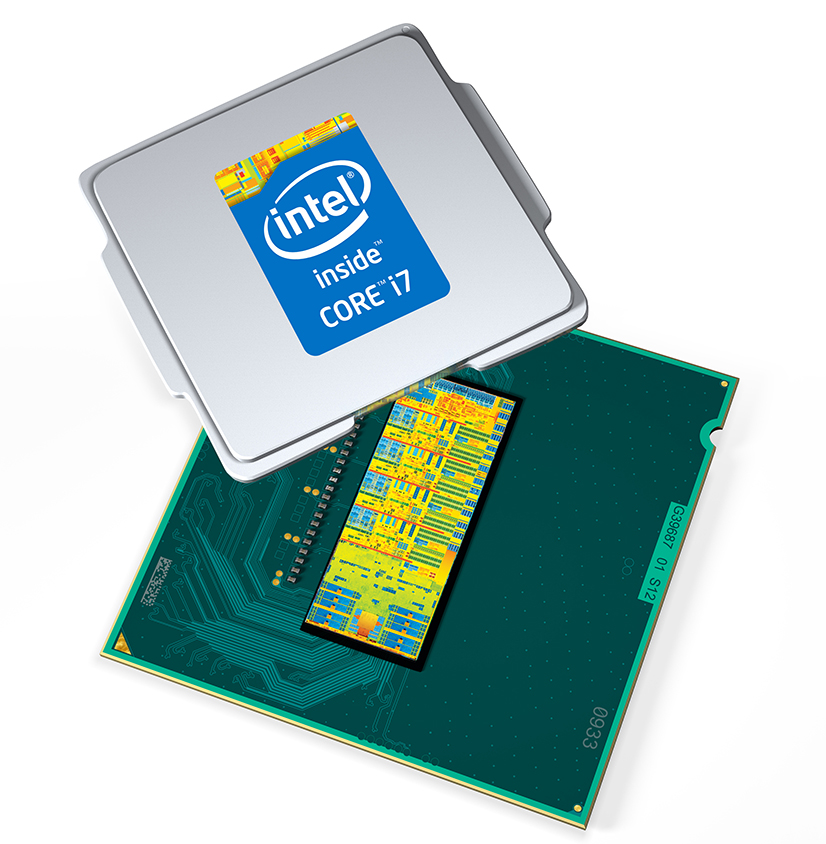
Faster, cooler, longer -- Intel launches its new Haswell chip
Into a PC processor market that’s declining thanks to competition from tablets and smartphones, Intel has launched its new Haswell chip. Announced at Computex in Taiwan, the fourth generation of Intel's Core series of processors, the Haswell will allow laptops and laptop/tablet hybrids to become thinner and run for longer between battery charges.
Intel says that the low power usage of the new chip -- as low as 6 watts -- will allow it to be used in fanless designs. Contrast this with the previous generation Ivy Bridge chip which needs two fans to keep the Microsoft Surface Pro cool.

Get detailed system information and benchmark your PC with AIDA64
Budapest developer FinalWire Ltd has released AIDA64 Extreme Edition 3.00 and AIDA64 Business Edition 3.00, a major new version of its diagnostic and benchmarking tools for Windows PCs.
The new release comes with completely rewritten memory bandwidth and latency benchmarks, along with optimized 64-bit benchmarks for AMD "Kabini" and Intel "Haswell" processors, plus support for the latest generation of AMD Radeon and nVIDIA GeForce graphics chips.

Windows 8 is bad for your health [updated]
I'm not saying Windows 8 is directly bad for your health -- but it can indirectly lead to lung cancer and countless other diseases. It can also indirectly get you addicted to a particular drug -- nicotine. How is this happening? Through Windows 8 in-app advertising.
As many of you know, I recently made the switch to Windows 8 -- for which I paid for the privilege. Paying for an operating system is unlike the very capable and robust Linux Mint, which is absolutely f
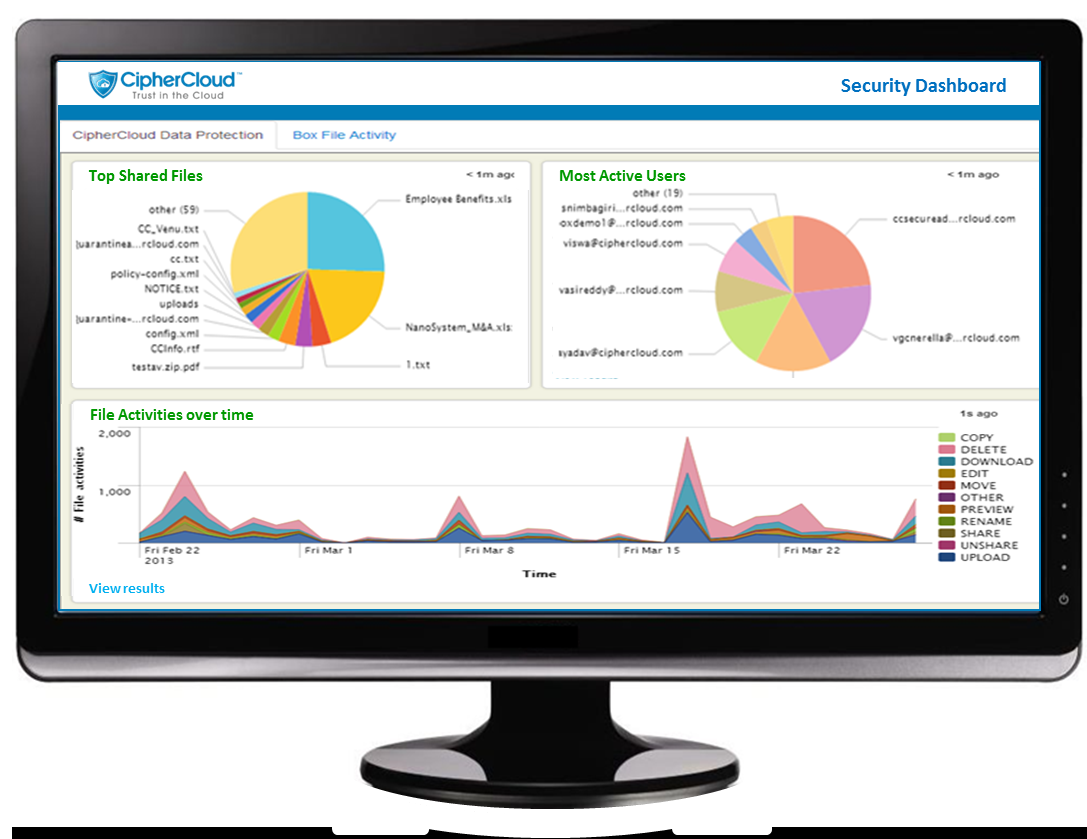
Box adds extra security layer with CipherCloud
You are moving to the cloud, regardless if you want to or not. The world is just headed that way, and Box is one of the frontrunners in this race. To stay in front the company today announces new security measures, using CipherCloud. This is in response to a growing need to prevent malware in this burgeoning market.
Weisen Li of Box, tells us "I’m excited to announce the availability of CipherCloud Data Loss Prevention (DLP) for Box. CipherCloud DLP for Box helps admins apply corporate DLP policies on content in Box while keeping it simple for end users".
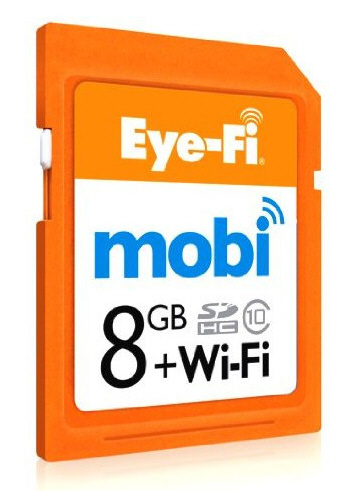
Eye-Fi's Mobi card lets you wirelessly transfer photos from a camera to your mobile device
Eye-Fi memory cards can automatically copy photos from your camera to a wireless enabled device, such as your PC, whenever you get in range. The new Mobi card, announced today, is designed to transfer photos from a camera to any iOS or Android handset.
All you have to do is insert the Mobi card into your camera, and use it as you would any ordinary SD card. Install the free app on your phone and pair it to the Mobi by entering a unique 10 digit code. Once paired, photos and videos can be copied over automatically.
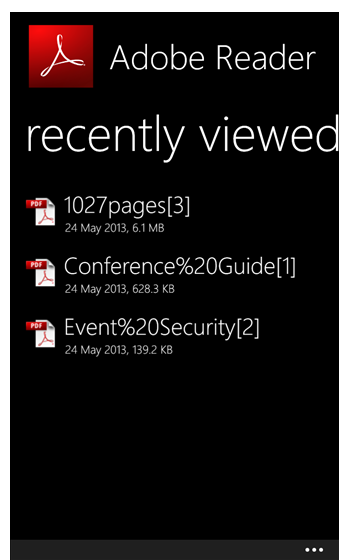
Adobe offers half-baked Reader app for Windows Phone
I use Adobe Reader sparingly on any platform. Alternatives abound and mostly those are faster and more secure. Still, the company persists and owns market share for PDF, among other things. That is why, today, when Adobe announces a Reader app for Windows Phone, customers take notice.
"Adobe Systems, which invented the PDF, this morning published its official PDF document reader for Windows Phone 8", says Microsoft's Michael Stroh.

ARM debuts Cortex-A12 and Mali-T622 GPU at Computex 2013
Taking center stage at Computex 2013, ARM's Cortex-A12 architecture and Mali-T622 GPU (Graphic Processing Unit) are setting their sights on the mid-range mobile device market.
According to an ARM spokesperson, there will be at least 580 million mid-range mobile devices hitting the competitive mobile space over the next two years -- with the mid-range market projected to exceed the number of high-end smartphones and tablets beginning in 2015. As such, it comes as little surprise that ARM is bolstering its mid-range portfolio, with the UK-based company looking beyond the high-end market which is currently dominated by Apple's wildly popular iPhone and Android handsets like the Samsung Galaxy S4. Both devices are powered by ARM-based silicon.

Shock survey: 37% of orgs plan to adopt Office 365 within 24 Months
The war for the hearts and minds of potential cloud email users at organizations worldwide is far from over. Both Microsoft and Google are winning small field skirmishes for their respective corners over the past few years. Most recently, Microsoft won huge contracts with the State of Texas and the City of Chicago moving to Office 365's vision for the cloud. Conversely, Google Apps chalked up big converts in the form of CBC Radio Canada and the US National Archives.
UK business technology website Computing.co.uk has published the results of a survey it ran across 160 IT decision makers from organizations of all shapes and sizes. While the survey sheds light on numerous opinions surrounding the major cloud email platforms, its most shocking finding is that a whopping 37 percent of organizations moving to the cloud for email are opting for Office 365 over all the major players. Other cloud vendors included in the survey results were Google Apps, Apple iWork, and QuickOffice.

Twitter's Vine now spreads to Android
As the Twitter social network steadily tries to overtake the world, its Vine video sharing service is now spreading like a kudzu vine -- even if you are miles above the Mason-Dixon line! Today Twitter announces that the service is spreading to Android, the largest mobile operating system around.
"Starting today, [Android owners] can begin to shoot, share and watch short looping videos. We’ve been looking forward to this day, and we’re excited to get the app into your hands", says Twitter's Sara Haider.

Microsoft reorganization is long overdue
Today, over at all AllThingsD, Kara Swisher reports that a major Microsoft makeover is imminent. Reorganization is bloody well overdue, and timing makes sense. The company's fiscal year closes June 30, and the final quarter is when employees, product groups and future plans are evaluated and rewarded and when internal changes occur.
I strongly expect the new structure to mesh with CEO Steve Ballmer's mandate Microsoft is now a "devices and services" company. His larger challenge is surmountable: Enabling a stronger siloed Microsoft that disables a power structure that resembles "A Game of Thrones" -- too many fiefdoms fighting cross-purposes to the kingdom Bill Gates created. Under the current structure, Ballmer deals with only five kingdoms, rather than book and HBO series' seven.
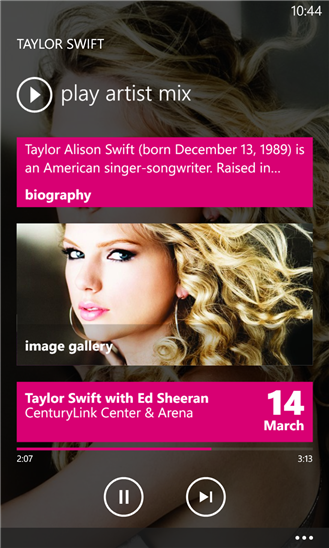
Nokia updates Music and Ringtone Maker for Windows Phone 8
On Monday, Finnish maker Nokia rolls out an update for its Music Windows Phone 8 app which now allows users to pay for the optional premium service using the mobile operator bill. The feature is currently offered for a select number of carriers.
The company says that mobile operator billing is available only when the "service provider and the content publisher support this payment method". This implies that, at least for now, users in certain regions might be stuck with the traditional purchasing option -- either a credit or debit card which must be added to their Nokia account.
Windows 8.1 sets out to woo the enterprise
Microsoft used the TechEd North America conference in New Orleans to unveil a raft of new and updated Windows 8.1 features aimed at businesses. Many of these are targeted at the world of cloud computing and connected devices, with enhancements for bring your own device (BYOD) connectivity, enhanced mobility features and security enhancements.
Key features include Workplace Join, allowing administrators to control access to corporate data even if employees are using their own devices. This goes hand-in-hand with Work Folders, allowing users to sync their device with a folder in a data center. Mobile Device management will let administrators create a company portal to give all users a consistent interface without the need to install a separate client management package.
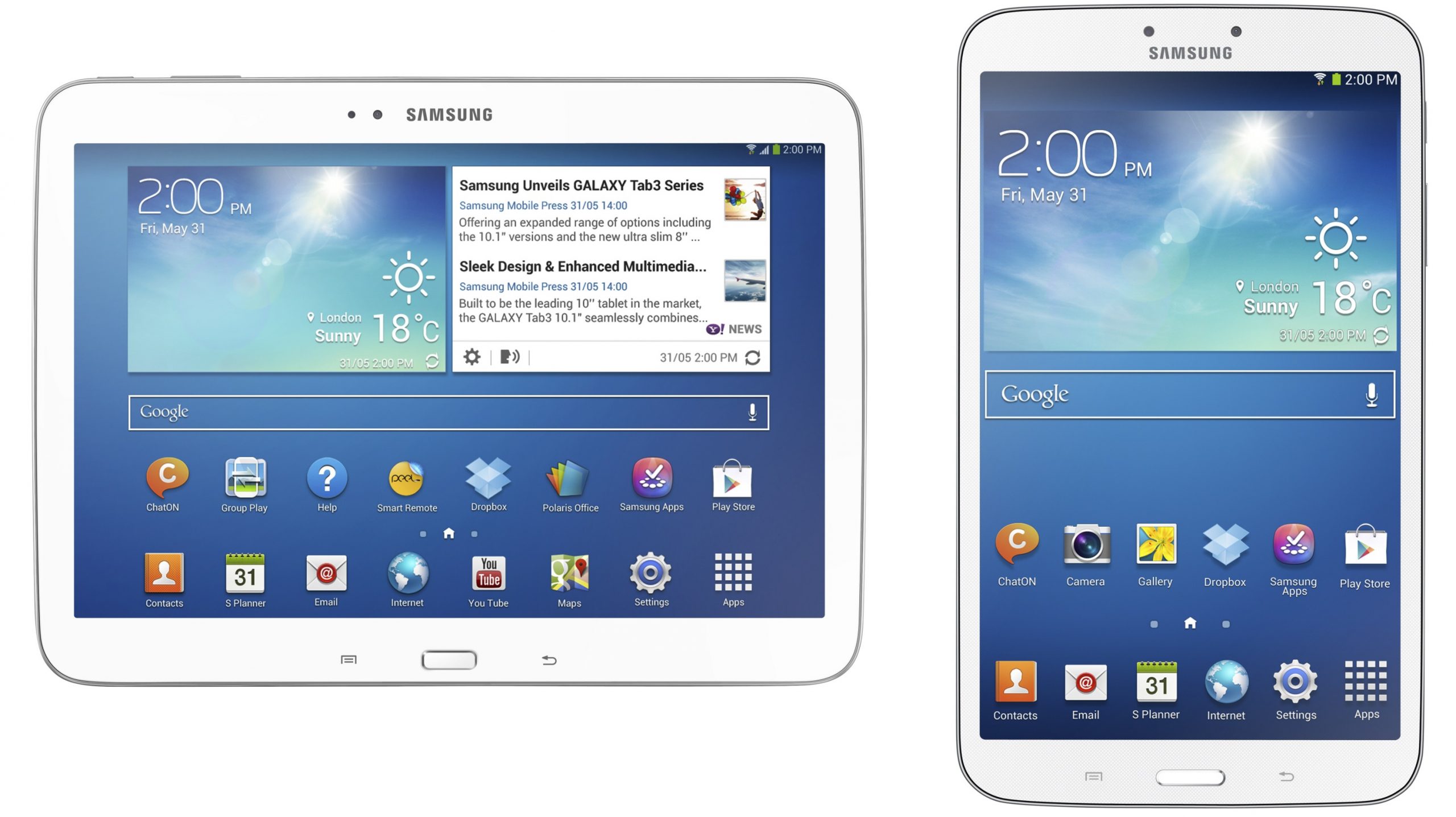
Samsung reveals two new Galaxy Tab fondleslabs running Android 4.2 Jelly Bean
South Korean manufacturer Samsung unveiled, on Monday, two new tablets as part of its Galaxy Tab 3 lineup. The fondleslabs, available in 8-inch and 10.1-inch display trim, run Android 4.2 Jelly Bean and feature mid-range to low-end hardware specifications.
Despite touting them as offering an "exceptional reading and entertainment experience", both the 8-inch and the 10.1-inch Galaxy Tab 3 tablets come with TFT displays sporting a resolution of 1280 by 800 (the ppi -- pixels per inch -- density is 189 and 149, respectively). That's on par with other 8-inch devices like the Galaxy Note 8.0 but significantly behind 10.1-inchers like the Google Nexus 10 (2560 by 1600 resolution and 300 ppi).